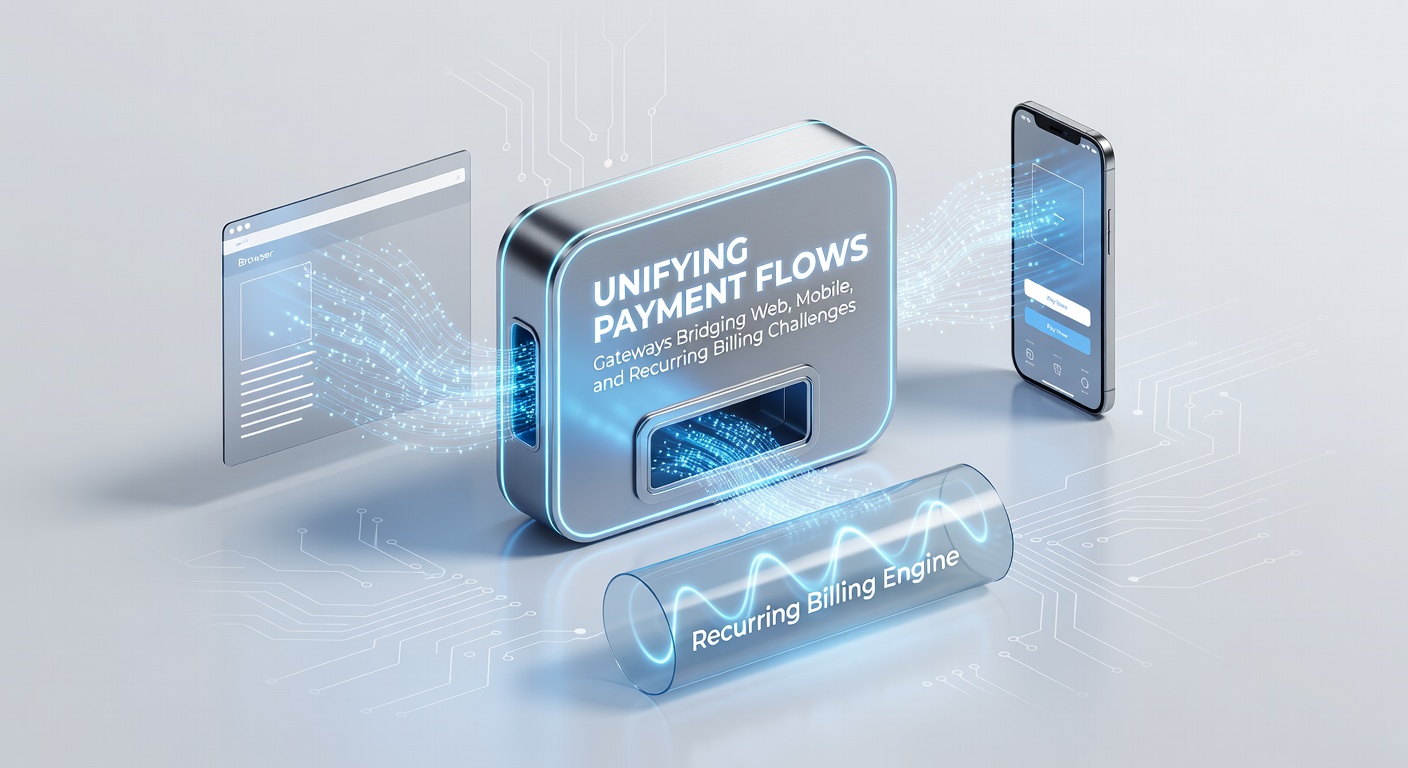
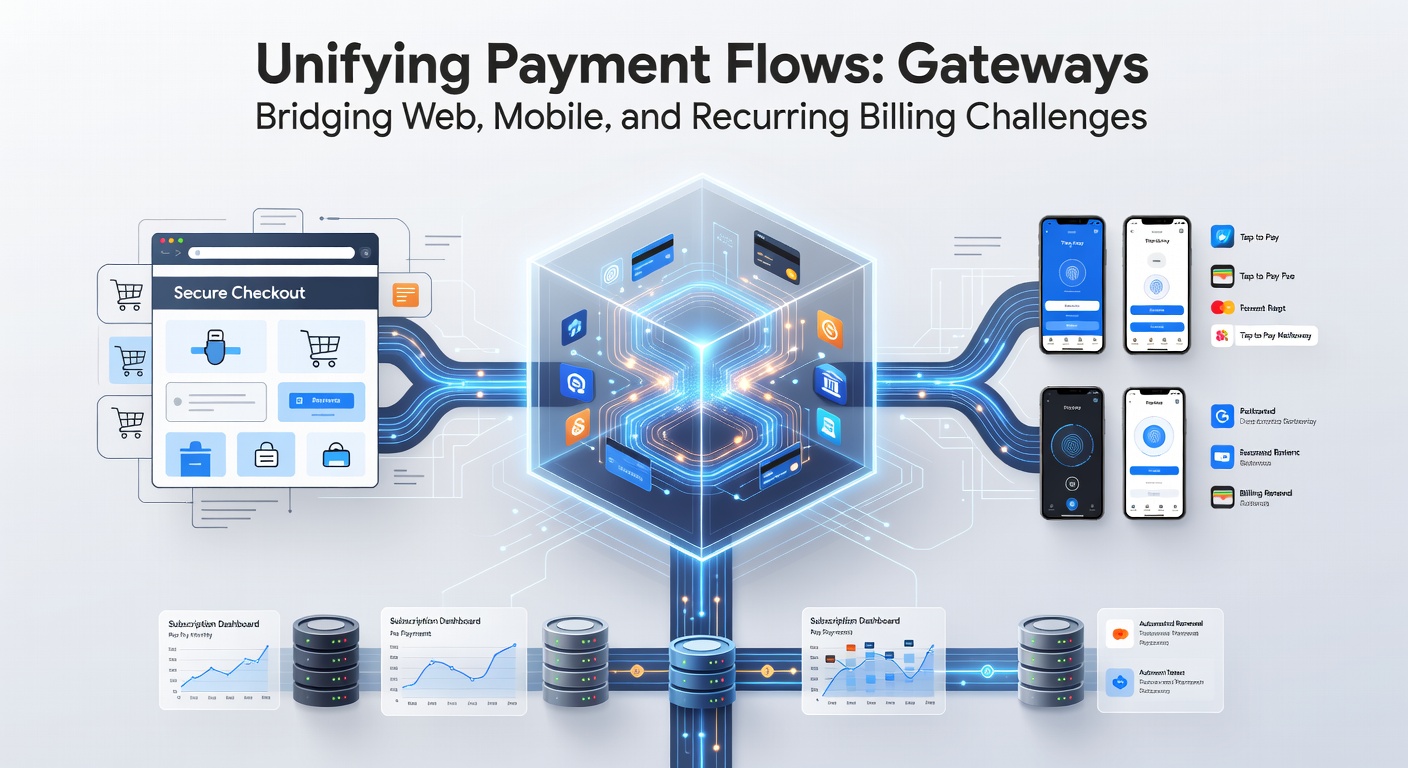
Unifying Payment Flows: Gateways Bridging Web, Mobile, and Recurring Billing Challenges
The Fragmented Reality of Modern Payments
Merchants today juggle multiple channels—web checkouts humming alongside mobile apps buzzing with impulse buys, while recurring billing ticks away in the background for subscriptions and memberships; this setup often leads to disjointed experiences where customers drop off mid-flow, carts abandon, and revenue slips through the cracks. Data from the Federal Reserve's triennial payments study reveals that U.S. non-cash payments surged 12% between 2020 and 2022, with mobile and digital wallets now accounting for over 40% of transactions, yet many businesses still wrestle with silos separating these vectors. Gateways step in as the great unifiers, stitching together these disparate threads into a single, coherent stream that keeps everything—from one-click web purchases to seamless app taps and automated renewals—running smoothly without the usual hiccups.
And while legacy systems creak under the weight of varying protocols, modern gateways leverage APIs and tokenization to normalize data across platforms; take one e-commerce operator who integrated such a solution and watched checkout conversions climb 25%, according to industry benchmarks from processor reports. What's interesting is how this unification tackles not just speed but security too, especially as fraud attempts on mobile alone hit record highs last year.
Web Payments: The Backbone That Can't Afford to Break
Web-based transactions form the sturdy core of online commerce, where shoppers expect lightning-fast loads and zero friction from desktop to tablet; however, inconsistencies in browser support for payment methods like Apple Pay or Google Pay often force redirects that inflate abandonment rates to 70%, figures that Payments Canada highlights in its annual landscape reports. Gateways bridge this by embedding unified checkout widgets that detect device capabilities on the fly, routing payments through optimized paths whether it's a credit card embed or wallet handshake.
Observers note that PCI-compliant gateways, which encrypt data end-to-end, cut breach risks significantly; one study from cybersecurity analysts found web fraud dropping 40% post-unification. But here's the thing: recurring elements creep into web too, like saved cards for loyalty programs, demanding gateways that sync token vaults across sessions without re-authentication every time.
Mobile's High-Stakes Speed Game
Mobile payments explode with on-the-go urgency—think ride-sharing apps or food delivery swipes where delays mean lost sales; app stores enforce strict guidelines, yet native integrations clash with webviews, creating hybrid flows that confuse both users and processors. Turns out, gateways with SDKs tailored for iOS and Android resolve this by abstracting complexities, allowing a single API call to handle NFC taps, in-app wallets, or even QR codes at physical counters.
Research indicates mobile transaction volumes will double by 2028, per global forecasts, pushing gateways to support pass-through 3D Secure protocols that verify without interrupting the swipe; people who've switched often discover latency plunging from seconds to milliseconds. Yet mobile introduces unique quirks, like biometric auth that must align with web fallbacks, and gateways excel here by mirroring user profiles across devices.
Recurring Billing: The Silent Revenue Engine
Subscriptions power steady cash flows for SaaS firms, gyms, and streaming services alike, but managing retries, proration, and dunning emails across web sign-ups and mobile renewals turns into a nightmare without unification; failed payments eat 20-30% of recurring revenue, data from subscription analytics platforms confirms. Gateways unify by centralizing billing schedules in a master ledger that triggers web invoices, app notifications, or SMS prompts interchangeably, while smart retry logic—testing cards at optimal times—boosts recovery to 60% or higher.
So when a customer pauses via mobile but resumes on web, the gateway syncs status instantly, avoiding double-charges or awkward support calls; experts have observed that platforms using vaulted tokens see churn drop by 15%, since preferences like billing day carry over seamlessly. It's noteworthy that as of April 2026, new SCA mandates in regions like the EU demand stronger customer auth for recurrings, and gateways adapt with invisible frictionless flows that maintain compliance without killing conversions.
Technologies Powering the Bridge
At the heart of unification lie robust APIs like RESTful endpoints that expose web, mobile, and recurring endpoints under one roof; tokenization services replace raw card data with secure IDs, usable everywhere from browser iframes to app deep links, slashing PCI scope dramatically. Blockchain-inspired ledgers emerge too, tracking disputes across channels, while AI-driven orchestration predicts failures—routing high-risk recurrings to voice auth when mobile signals weaken.
Standards play their part: EMVCo's specs ensure mobile SRC aligns with web 3DS, and ISO 20022 messaging harmonizes data formats globally; one case saw a retailer halve integration time by adopting a gateway's single-SDK approach for all three flows. But the real magic unfolds in orchestration layers, where gateways fan out requests to multiple acquirers, cherry-picking the best rates or routes based on channel and risk.
Real-World Wins and Case Studies
Consider a fitness app chain that unified its web portal, iOS/Android apps, and monthly dues through a gateway overhaul; post-launch, subscription retention jumped 28%, with mobile sign-ups converting 35% faster since users could start on app and manage via web without re-entry. Another example involves a cross-border e-tailer grappling with currency mismatches— the gateway normalized FX across platforms, cutting disputes by 22% while enabling recurrings in local wallets.
There's this case where a SaaS provider faced mobile webview glitches derailing trials; implementing a headless gateway fixed it, funneling all to a unified processor that handled webhooks for instant status syncs. Figures reveal such integrations yield 18-25% uplift in lifetime value, as frictionless flows encourage upgrades across devices. And for enterprises, dashboard analytics consolidate metrics—showing web drop-offs feeding mobile retries, or recurring health per cohort—empowering data-driven tweaks.
Navigating Regulations and Future Shifts
Compliance weaves through every bridge: gateways embed PSD2's strong customer auth for EU flows, mirroring it in U.S. via network exemptions, while Australia's NPP rails demand real-time capabilities that span web-to-mobile seamlessly; breaches in any channel ripple, but unified monitoring catches them early. As April 2026 unfolds, ISO 2022 adoption accelerates cross-border recurrings, with gateways frontrunning via pluggable modules.
Looking ahead, Web3 wallets and embedded finance loom large, where gateways will tokenise crypto for recurring stables or NFT drops across hybrid channels; early adopters report 40% smoother onboarding. Yet challenges persist—like balancing privacy under CCPA with personalization—but gateways evolve with federated learning, anonymizing data while unifying experiences.
Conclusion: Seamless Flows as the New Standard
Unifying web, mobile, and recurring billing through gateways isn't just tech wizardry; it's the linchpin for merchants capturing the omnichannel shopper who flips from phone to laptop mid-cart, expects recurrings to hum quietly, and bails at the first snag. Data underscores the payoff—conversion lifts, churn dips, revenue stabilizes—while case after case proves the bridge holds firm under volume. Those who implement early position ahead, as fragmented pasts give way to fluid futures where payments just work, everywhere, every time.