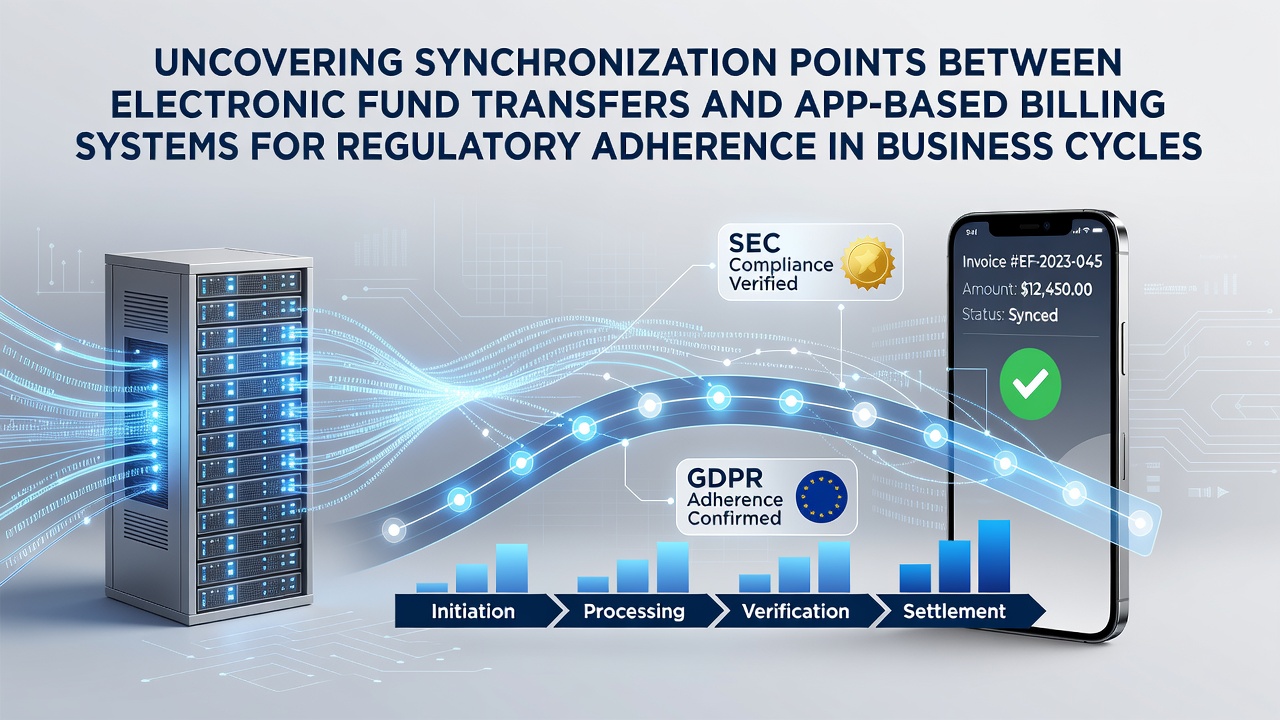
Uncovering Synchronization Points Between Electronic Fund Transfers and App-Based Billing Systems for Regulatory Adherence in Business Cycles
Business operations depend on precise timing between electronic fund transfers and app-based billing platforms, and observers note that these synchronization points determine whether companies meet regulatory requirements across monthly and quarterly cycles. Data from payment networks shows that mismatches in settlement timing often trigger compliance reviews, while aligned systems reduce the frequency of such audits.
Core Components of Electronic Transfers and App Billing
Electronic fund transfers operate through established clearing networks that move funds between bank accounts on fixed schedules, and app-based billing systems generate invoices through mobile interfaces that capture customer authorizations in real time. Researchers tracking these flows have found that the handoff between the two occurs at specific checkpoints, such as when an app confirms a recurring charge and then initiates a batch file for bank processing. Those checkpoints become critical during business cycles because regulators examine whether authorization timestamps match actual fund movements within required windows.
Industry reports indicate that many organizations run these systems on separate platforms, which creates opportunities for data drift if reconciliation processes lag. One study of merchant operations revealed that companies using automated matching tools achieved higher rates of on-time reporting compared with those relying on manual reviews.
Key Synchronization Points in Practice
Timing alignment represents the first major point, because billing events scheduled on the first of the month must feed into transfer batches that settle on the same or next business day. Payment processors handle this through API calls that carry both the authorization token and the scheduled settlement date, and regulators review these records to confirm that no unauthorized delays occur. A second point involves audit trail continuity, where every app transaction receives a unique identifier that travels with the electronic transfer record all the way to the receiving bank.

Observers have documented cases where missing identifiers led to extended compliance examinations lasting several weeks. A third synchronization point centers on exception handling, such as when a customer disputes a charge after the funds have already left the app system but before they reach final settlement. In these situations, coordinated reversal protocols between the two systems allow merchants to stay within regulatory timeframes for dispute resolution.
Regulatory Requirements Across Regions
Rules from the Federal Reserve emphasize that authorization records must remain accessible for seven years, and similar retention standards appear in other jurisdictions. The European Central Bank has outlined expectations for payment service providers to maintain synchronized logs that support both consumer protection and anti-money laundering checks. Canadian regulators have introduced parallel requirements focused on real-time reporting of large-value transfers that originate from mobile billing platforms.
August 2026 marks the date when several updated data-sharing rules take effect in multiple regions, requiring tighter integration between billing apps and transfer networks to support automated regulatory submissions. Companies that have already mapped their synchronization points report smoother transitions to these new formats.
Business Cycle Alignment Strategies
Monthly billing cycles create predictable patterns that clearing networks can accommodate through pre-scheduled batch windows, yet quarterly cycles introduce larger transaction volumes that demand additional reconciliation steps. Organizations that map these volumes against network capacity avoid bottlenecks that might otherwise flag compliance monitoring systems. Data shows that peak periods around quarter-end coincide with higher volumes of exception items, so firms often increase staffing for those windows to maintain alignment.
One research project examined subscription businesses and found that those synchronizing their app billing close dates with electronic transfer cut-off times experienced fewer regulatory queries. The same study noted that integration layers using standardized message formats reduced the time required to produce compliance reports by measurable percentages.
Conclusion
Synchronization between electronic fund transfers and app-based billing systems rests on identifiable checkpoints that support regulatory adherence throughout recurring business cycles. Organizations that maintain continuous audit trails, align settlement timing, and prepare for updated rules such as those effective in August 2026 position themselves to meet reporting obligations without disruption. Continued monitoring of these integration points allows payment operations to remain consistent even as transaction volumes and regulatory expectations evolve.