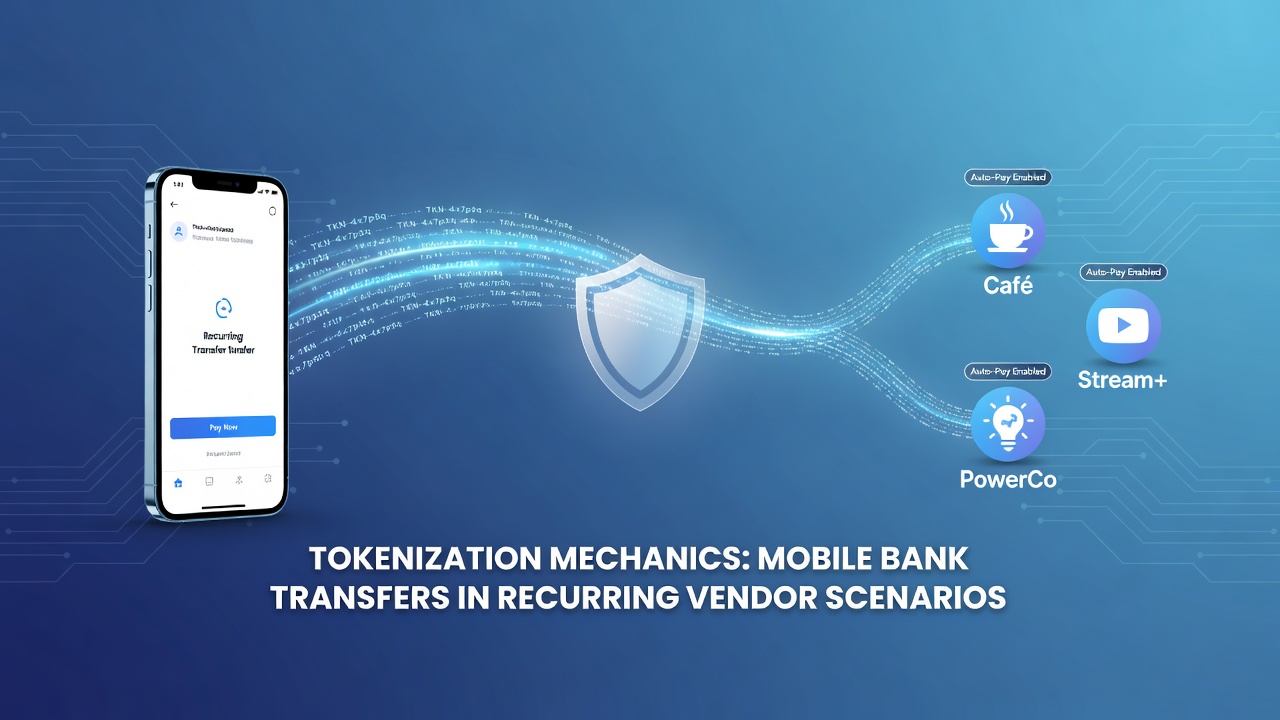
Tokenization Mechanics Behind Mobile Bank Transfers in Recurring Vendor Scenarios
Tokenization replaces sensitive bank account details with unique, non-reversible tokens during mobile-initiated transfers to vendors on a recurring basis, and this process occurs through secure vaults managed by payment processors or financial institutions. Researchers at institutions studying payment systems have documented how the mechanism begins when a mobile application collects account and routing numbers, then immediately forwards those details to a token service provider that generates a token mapped to the original data in a protected database. The original information never leaves the vault environment after initial storage, which limits exposure during each subsequent transfer cycle.
Core Components of Token Generation
Generation relies on cryptographic algorithms that produce tokens specific to the merchant, device, and payment channel, while the service provider maintains a lookup table that links each token back to the underlying account without exposing it in transit or on the mobile device. Studies from payment networks indicate that tokens incorporate expiration parameters and usage limits tailored to recurring vendor agreements, so a single token might authorize monthly debits for a fixed period before requiring renewal through the same vault process. Observers note that this setup integrates with automated clearing house protocols, where the token triggers an ACH debit request without transmitting account numbers over public networks.
Device binding adds another layer, as the token service associates the generated token with hardware identifiers from the smartphone, and any mismatch during a recurring request triggers a re-authentication flow that pulls fresh authorization from the account holder. Data from industry reports reveal that such binding reduces unauthorized use in vendor subscription models by requiring both the token and a matching device signature for each scheduled transfer.
Recurring Authorization Flows
In recurring vendor scenarios the mobile application stores only the token after initial setup, and when the billing date arrives the app or backend system submits the token along with transaction details to the processor, which then retrieves the account information from the vault to initiate the bank transfer. Experts have observed that this retrieval happens within milliseconds through encrypted internal channels, and the processor returns only a confirmation or decline code to the mobile interface without ever sending the account data back to the device. Figures from network operators show that this separation supports high-volume subscription billing while meeting compliance requirements for data minimization in electronic fund transfers.
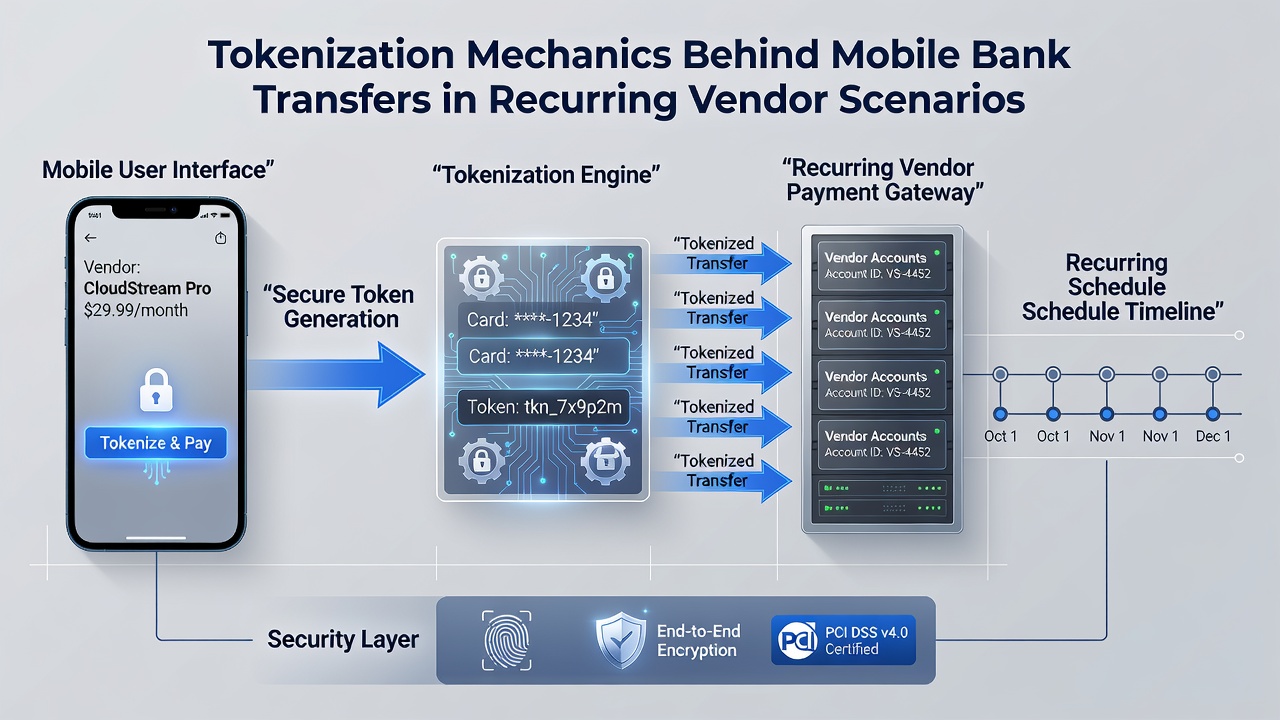
Renewal mechanics come into play when a token reaches its configured limit or when the underlying account changes, and the system prompts the user through the mobile app to re-enter bank details that generate a replacement token while the old one is retired from the vault. Those who've studied these systems know that batch processing for recurring schedules often groups multiple vendor requests, allowing the processor to map several tokens to their respective accounts in a single vault query before submitting aggregated ACH files to the clearing network. Research indicates that this batch approach improves efficiency for vendors managing large customer bases without increasing risk exposure.
Security and Compliance Integration
Security protocols embed additional controls such as dynamic cryptograms that change with each recurring request, and these elements combine with the static token to create a one-time authorization code verified at the processor level before the bank transfer proceeds. According to guidance from the Federal Reserve on payment security, such layered authentication aligns with broader standards for protecting consumer account information during electronic transfers. In August 2026 updates to network rules are scheduled to require enhanced token lifecycle management for all recurring ACH transactions initiated from mobile channels, including mandatory logging of token issuance and retirement events.
European Central Bank documentation on payment services highlights parallel requirements in the region, where tokenization must support strong customer authentication for each new recurring mandate even when the initial setup used a mobile device. Observers note that cross-border vendor scenarios therefore maintain separate token sets for different regulatory jurisdictions, preventing a single token from being used across incompatible clearing systems. Academic papers on financial cryptography describe how vault architectures employ hardware security modules to store the mapping tables, ensuring that even if a mobile application is compromised the tokens remain useless without the corresponding vault access.
Operational Examples in Vendor Ecosystems
One documented case involves subscription services that process monthly vendor payments through mobile bank links, where the token remains valid for twelve cycles before automatic rotation, and the processor handles all mapping internally so the vendor dashboard displays only transaction status rather than account details. Another instance shows how utility companies accept mobile-initiated recurring debits by issuing tokens scoped exclusively to their merchant ID, which blocks any attempt to redirect the token to a different payee. Industry reports confirm that these scoped tokens reduce disputes in recurring billing by enforcing merchant-specific usage from the moment of generation.
Conclusion
Tokenization mechanics for mobile bank transfers in recurring vendor scenarios center on vault-based mapping, device-bound generation, and scoped authorization that together support secure, repeated ACH debits without repeated exposure of account data. Ongoing developments in network rules and cryptographic standards continue to refine these processes for both domestic and international payment flows.