Synchronizing Encrypted Ledger Bridges Between Portable Billing Apps and Settlement Infrastructures for Subscription Continuity
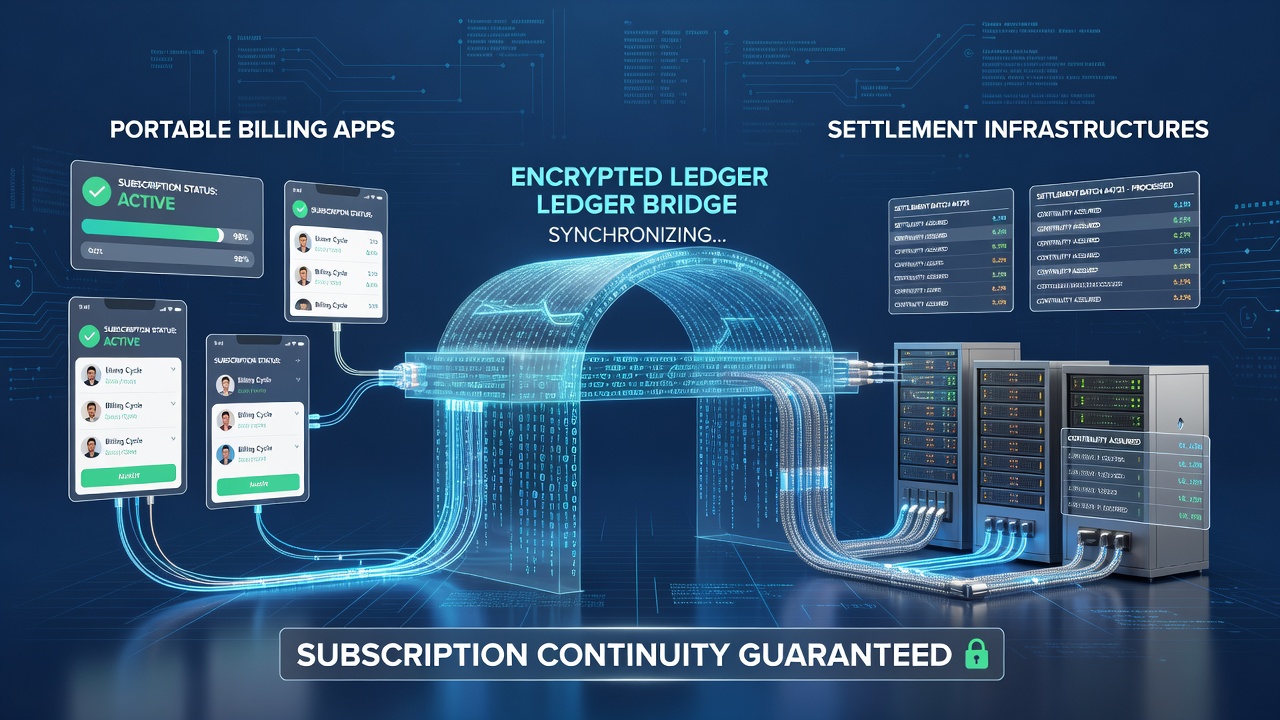
Portable billing applications now rely on encrypted ledger bridges to maintain continuous data flow with settlement infrastructures, and these connections prevent subscription interruptions by synchronizing transaction records across mobile devices and banking networks. Developers build these bridges using distributed ledger protocols that encrypt each entry at the point of capture, then replicate the data to clearing systems without exposing raw account details during transit.
Observers note that synchronization occurs through consensus mechanisms where mobile apps generate ledger entries for recurring charges and push them to settlement nodes in real time, while settlement infrastructures validate the entries against account balances before confirming completion. This process supports subscription continuity because any mismatch triggers an automated retry sequence that pulls updated status from the ledger rather than waiting for manual intervention from users or merchants.
Core Components of Ledger Bridge Architecture
Encrypted ledger bridges consist of three primary layers that handle key exchange, transaction hashing, and settlement confirmation, and each layer operates independently yet shares synchronized state through cryptographic commitments. The mobile layer captures billing events from portable apps, applies end-to-end encryption using rotating keys, and writes the hashed record to a local ledger shard before transmission occurs.
The bridge layer performs cross-platform validation by comparing mobile-generated hashes against settlement records, while the settlement layer finalizes entries once bank networks clear the associated funds. Researchers have documented that this layered approach reduces latency in recurring billing cycles because failed authorizations can be reprocessed from the encrypted ledger without requiring fresh user input.
Data Synchronization Protocols in July 2026
As of July 2026, several payment networks adopted updated synchronization standards that allow ledger bridges to handle higher transaction volumes from portable devices while maintaining compliance with data protection regulations across multiple jurisdictions. These standards require that every ledger entry include timestamped proofs of encryption and a verifiable chain of custody that settlement systems can audit without decrypting user data.
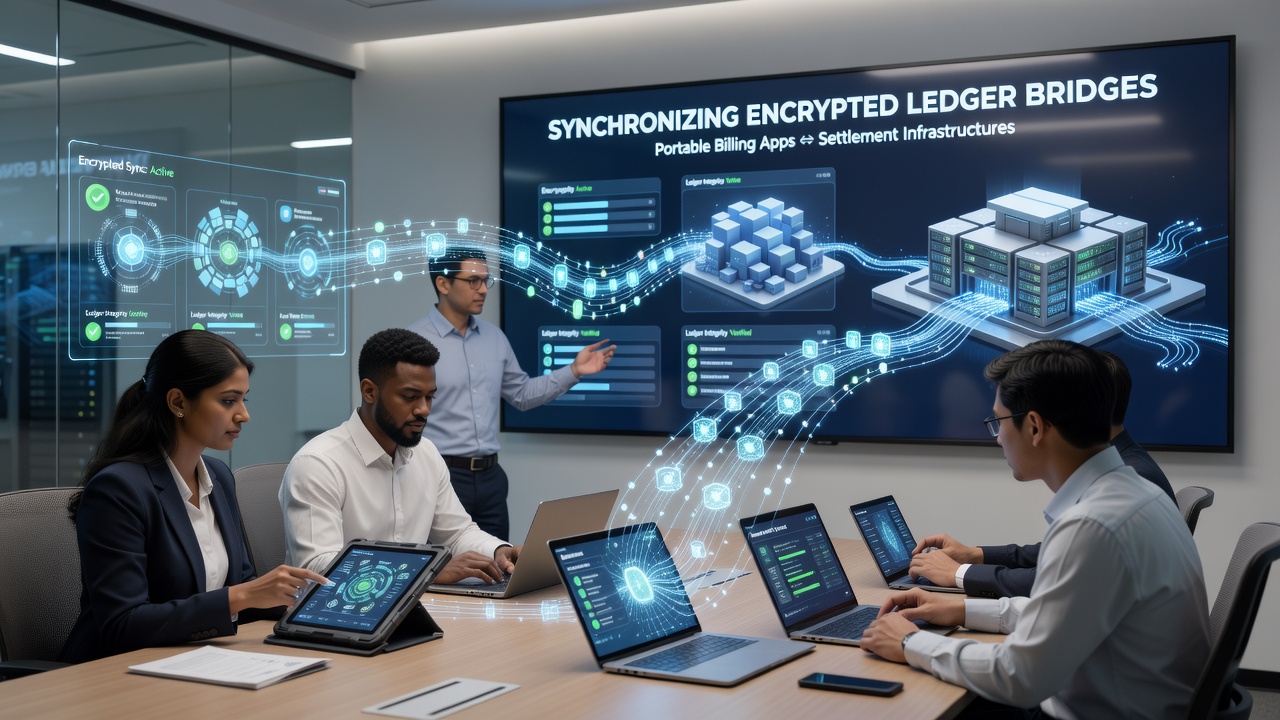
Implementation teams integrate these protocols into existing mobile billing frameworks by deploying lightweight nodes that communicate with both application servers and clearing houses through secure channels, and this setup ensures that subscription status remains consistent even when devices switch networks or experience temporary connectivity loss.
Security Measures and Compliance Alignment
Security within these bridges centers on zero-knowledge proofs that let settlement infrastructures confirm transaction validity without accessing underlying billing details, and this method aligns with regulatory requirements established by bodies such as the European Central Bank. Portable apps generate proofs locally before transmission, so the bridge never holds plaintext information that could be compromised during a breach.
Compliance teams verify that synchronization routines meet standards for data residency by routing ledger entries through region-specific nodes, and this geographic distribution prevents cross-border violations while still allowing global subscription services to operate without interruption. Data from the Bank for International Settlements shows increasing adoption of such distributed verification techniques in cross-platform payment environments.
Operational Benefits for Subscription Services
Subscription providers gain operational stability when ledger bridges eliminate the need for repeated authentication prompts after initial setup, because the encrypted records carry forward all necessary authorization tokens in a form that settlement systems recognize across billing cycles. Merchants report fewer involuntary churn events since the bridge automatically reconciles discrepancies between mobile-recorded charges and actual bank transfers.
Those who manage large-scale recurring revenue streams observe that synchronization also supports dynamic pricing adjustments because updated rate information can be written to the ledger and propagated to settlement nodes without requiring separate API calls from each billing application. This capability becomes particularly useful during periods when exchange rates or tax rules change mid-cycle.
Integration Challenges and Technical Resolutions
Integration teams encounter challenges when legacy settlement systems use different data formats than modern mobile ledgers, yet middleware adapters resolve these mismatches by translating entries into compatible structures before encryption occurs. Testing protocols now include simulated network partitions to verify that bridges can resume synchronization once connectivity returns without duplicating charges.
Performance benchmarks indicate that optimized bridge implementations complete full ledger-to-settlement cycles in under two seconds for most subscription events, and this speed supports real-time user notifications that keep customers informed about payment status without manual checks. Ongoing refinements focus on reducing the computational overhead of proof generation on lower-powered portable devices.
Conclusion
Encrypted ledger bridges continue to evolve as the connective tissue between portable billing applications and settlement infrastructures, and their role in preserving subscription continuity grows as transaction volumes increase. Organizations that deploy these systems benefit from synchronized records that reduce processing errors and maintain compliance across jurisdictions. Future developments will likely emphasize further reductions in synchronization latency while preserving the cryptographic guarantees that protect user data throughout the payment lifecycle.