Settlement Timelines and Their Ripple Effects on Cash Flow Stability in Blended Credit and ACH Setups for Growing Vendors
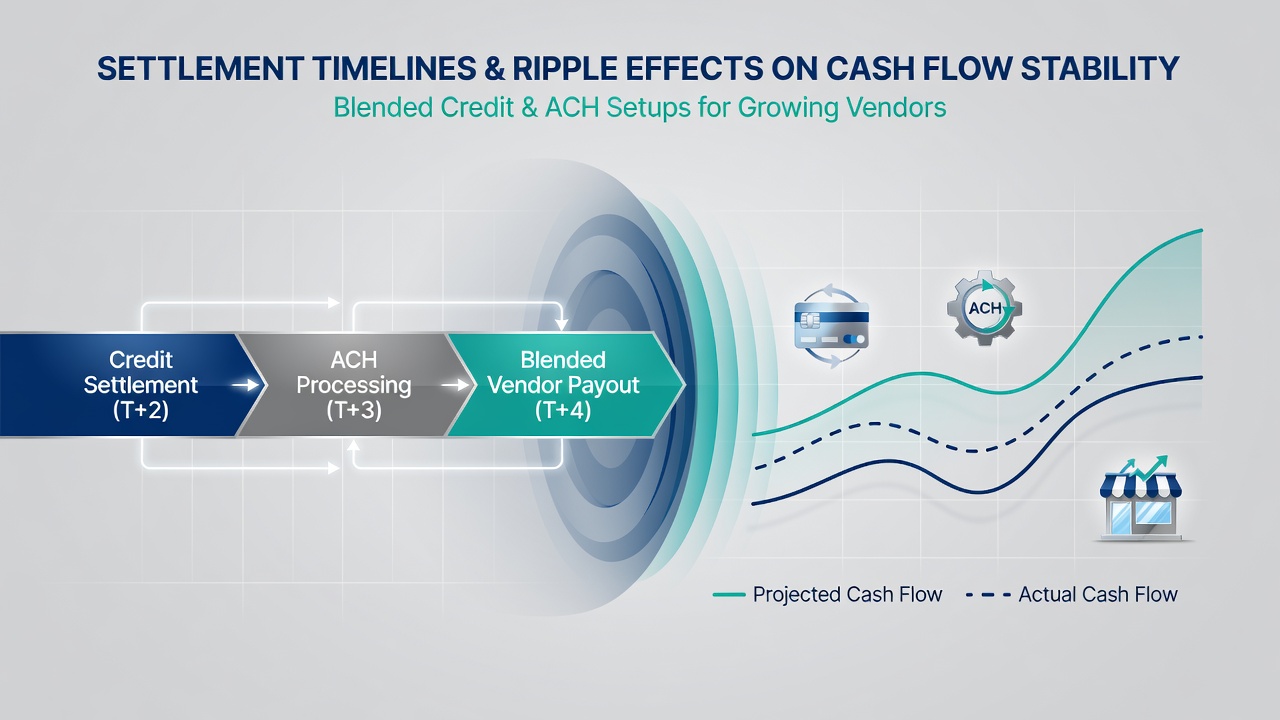
Settlement timelines in payment processing determine when funds from credit card transactions and ACH transfers reach vendor accounts, and these schedules create direct effects on cash flow stability for businesses that combine both methods. Credit card settlements typically clear within one to three business days while ACH transfers often require two to five days depending on the network rules and verification steps involved. Growing vendors rely on these blended setups to manage high volumes of recurring and one-time payments yet the staggered arrival of funds can create gaps that affect payroll, inventory orders, and operational expenses.
How Credit and ACH Settlement Windows Interact
Blended systems route some customer payments through card networks and others through the Automated Clearing House, so the timing differences compound when a vendor processes a mix of both on the same day. Card processors deposit approved amounts faster because they operate on real-time authorization followed by batch settlement, whereas ACH batches move through originating and receiving depository institutions that enforce additional security holds. Observers note that vendors who track these windows closely can align outgoing obligations with incoming deposits, and data from payment processors shows that mismatches in timing account for a measurable portion of short-term borrowing needs among expanding businesses.
Cash Flow Patterns in Expanding Operations
Research indicates that vendors experiencing rapid growth often see revenue double within eighteen months, and this acceleration magnifies the impact of even small delays in settlement. A vendor handling $200,000 monthly through credit cards receives those funds quickly enough to cover immediate supplier invoices, yet the same volume routed partly through ACH can leave 30 percent of the total unavailable for three additional days. Figures reveal that companies using blended methods without synchronized forecasting tools experience higher instances of overdraft fees and emergency credit draws, particularly during peak sales periods when both payment types peak simultaneously.
Operational Adjustments Vendors Make
Many growing vendors adopt automated reconciliation software that forecasts settlement dates based on transaction type and historical processing speeds. These tools pull data from gateway reports and bank feeds to project daily available balances, allowing finance teams to schedule ACH-initiated vendor payments on days when credit settlements are expected. One study of mid-sized e-commerce operations found that such forecasting reduced the frequency of cash shortfalls by 22 percent over a twelve-month period, and similar results appear in reports covering both North American and European markets.
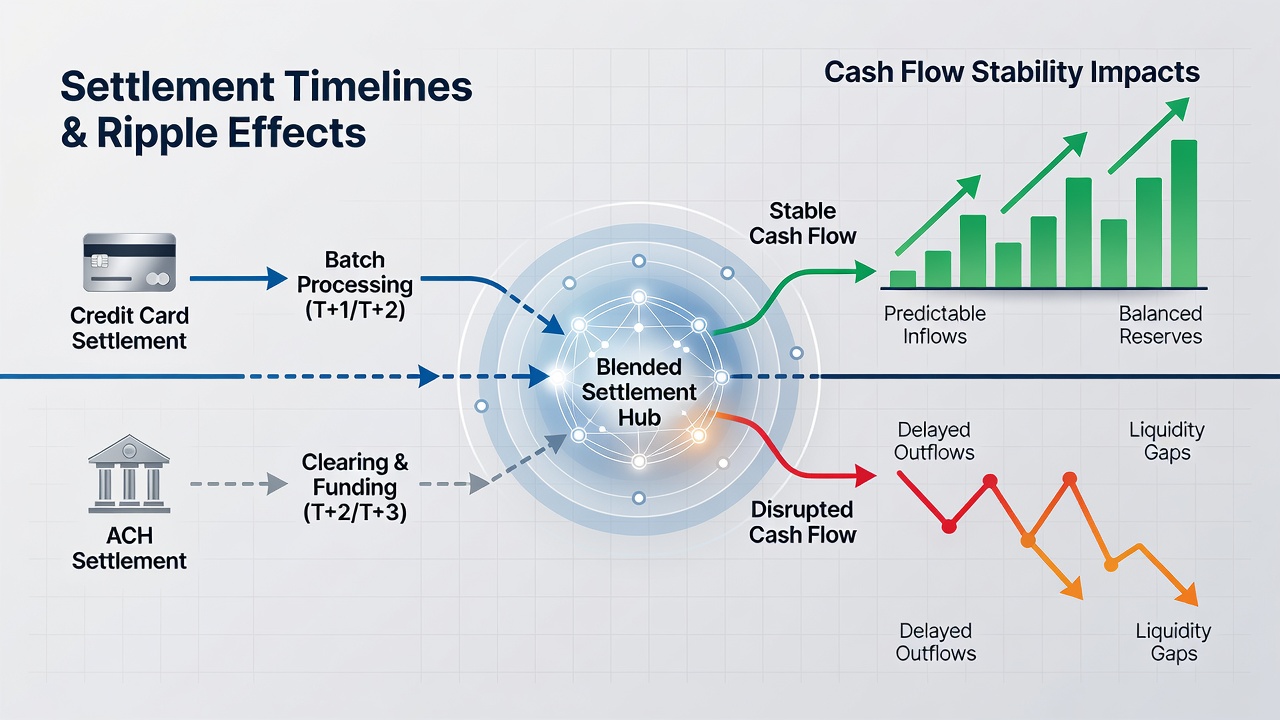
Payment platforms also offer options such as instant funding advances against pending ACH batches, though these carry fees that vendors weigh against the cost of traditional lines of credit. According to Federal Reserve data on electronic payments, the volume of same-day ACH transactions has risen steadily since 2021, and this shift provides one avenue for vendors seeking tighter alignment between credit and bank transfer inflows.
Regulatory Context and Timeline Considerations
Rules governing ACH processing continue to evolve, with updates from bodies such as the Federal Reserve and international counterparts shaping how quickly funds move. In August 2026 several enhancements to cross-border ACH frameworks are scheduled to take effect in multiple jurisdictions, and these changes may shorten certain settlement windows for vendors operating internationally. Observers point out that businesses monitoring these regulatory calendars can adjust their internal cash management practices ahead of teh implementation dates rather than reacting after the fact.
Compliance requirements add another layer because both credit and ACH transactions must satisfy security standards that sometimes extend verification periods. Vendors that maintain separate ledgers for each payment channel often discover that unified dashboards improve visibility into expected settlement dates across the entire portfolio. Data from industry reports shows that firms adopting integrated views reduce the average time spent reconciling accounts by nearly 15 hours per month.
Examples from Vendor Operations
Take one subscription platform that processes 60 percent of recurring charges through credit cards and the remaining 40 percent via ACH; when monthly billing cycles align with slower ACH settlements the platform experiences a temporary dip in available cash that coincides with peak customer support costs. Another case involves a wholesale supplier that shifted a portion of its B2B invoicing to blended payments and subsequently introduced buffer reserves sized to cover the longest typical settlement lag observed in its transaction history. Those reserves, sized according to actual rather than estimated timelines, allowed the supplier to maintain steady inventory purchases without increasing short-term debt.
Conclusion
Settlement timelines in blended credit and ACH environments directly influence how predictably growing vendors can access their revenue. Organizations that map the specific windows for each transaction type and integrate those maps into daily financial planning reduce exposure to timing mismatches. As payment networks introduce faster options and regulatory updates such as those planned for August 2026 take effect, the range of tools available to stabilize cash flow continues to expand, and vendors who incorporate timeline awareness into their operational systems position themselves to handle volume growth without corresponding increases in financing costs.