Predictive Analytics Frameworks Spot Irregularities in Vendor Fund Authorizations
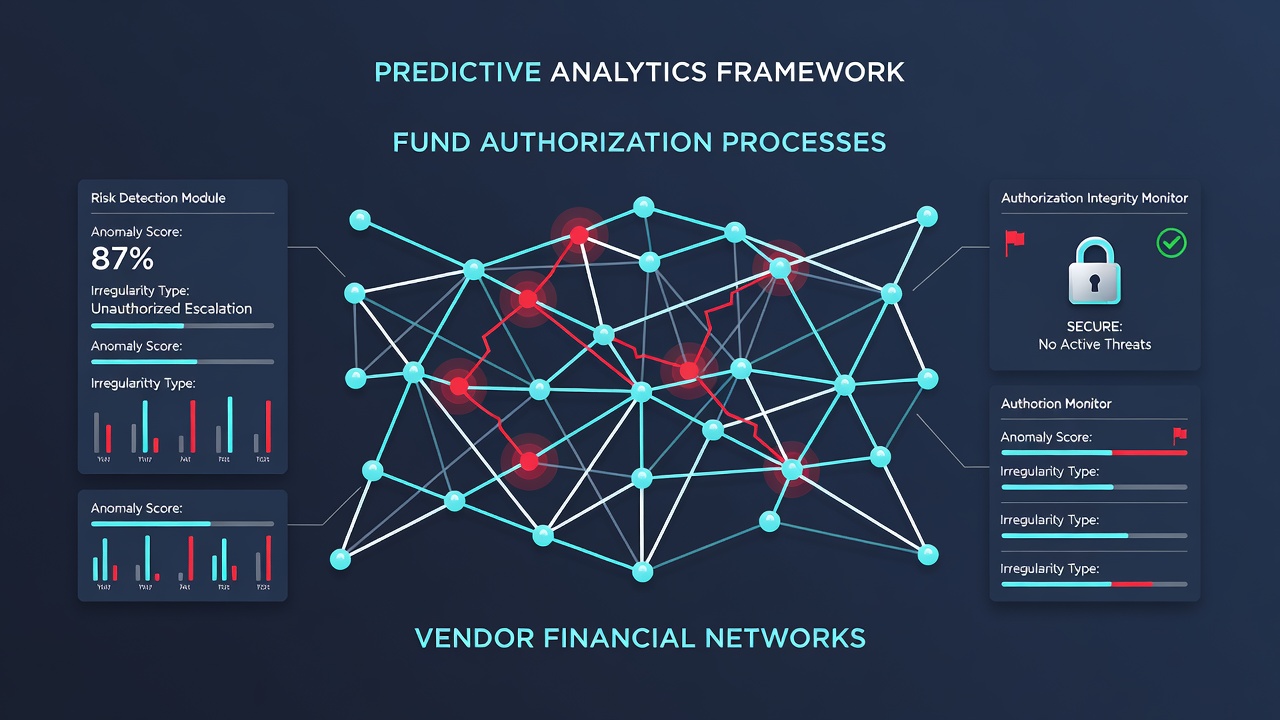
Predictive analytics frameworks examine transaction data streams during fund authorization steps in vendor financial networks, and these systems combine historical patterns with real-time inputs to flag potential irregularities before funds move. Researchers note that the process begins when authorization requests reach network gateways where models assess variables such as amount deviations, timing anomalies, and vendor relationship histories. Data shows these frameworks reduce unauthorized transfers by processing millions of data points per second across interconnected bank and merchant systems. Frameworks rely on supervised and unsupervised machine learning techniques that train on labeled datasets of past authorizations. According to Federal Reserve reports on payment system security, organizations deploy gradient boosting algorithms alongside neural networks to score risk levels during the brief window between request submission and approval. Observers note that integration occurs at multiple network nodes, which allows the models to cross-reference vendor identifiers against known entity profiles while checking for inconsistencies in routing information.
Core Components of Detection Systems
Several layers operate together inside these frameworks. Feature engineering extracts elements like frequency of authorizations, geographic origin of requests, and changes in vendor account details. Anomaly detection modules then apply statistical thresholds that adjust dynamically based on seasonal transaction volumes. Studies from the Bank for International Settlements highlight how such adaptive thresholds improve accuracy in high-volume vendor environments where payment cycles repeat daily. Network operators feed live authorization logs into centralized analytics engines, and these engines generate alerts that route to compliance teams for review. People who manage vendor networks often integrate these alerts with existing workflow tools so that flagged transactions pause automatically until further verification completes. This setup supports compliance requirements under various regional payment regulations without disrupting legitimate high-speed processing.
Application in July 2026 Network Environments
By July 2026, many vendor financial networks had expanded adoption of these frameworks following updates to cross-border payment standards. Data indicates that European and North American operators synchronized their models to handle multi-currency authorizations while maintaining consistent irregularity detection rates. Implementation teams connect the analytics layer directly to clearing mechanisms so that risk scores influence authorization outcomes in milliseconds.

One documented deployment involved a mid-sized procurement platform that linked its vendor database to a predictive scoring service. The system identified clusters of authorization requests sharing similar device fingerprints and unusual timing patterns, which led to further investigation of those vendor entries. Similar cases appear in industry reports where frameworks caught attempts to reroute funds through newly created vendor profiles that lacked matching historical activity.
Integration Challenges and Technical Approaches
Connecting predictive models to legacy authorization infrastructure requires careful mapping of data fields and secure transmission protocols. Technicians often use API gateways that encrypt feature vectors before they reach the analytics engine, and this step preserves confidentiality across vendor network participants. Research indicates that latency remains a primary concern because authorization decisions must complete within strict time limits set by card networks and automated clearing systems. Teams address these constraints by deploying edge computing nodes that perform initial scoring close to the authorization source. Only higher-risk cases escalate to central models for deeper analysis. This tiered approach keeps overall processing times within acceptable ranges while still capturing complex irregularity patterns that single-layer systems might miss.
Performance Metrics Across Deployments
Metrics tracked by network administrators include precision rates for flagged transactions and false positive volumes that require manual review. Figures from multiple operators reveal that well-tuned frameworks achieve precision above 85 percent on known irregularity types while maintaining review queues below operational thresholds. Continuous retraining cycles incorporate new authorization outcomes so models adapt to emerging patterns in vendor payment behavior. Vendors themselves benefit when networks share aggregated risk signals back through secure channels. This feedback loop lets suppliers adjust internal processes that might otherwise trigger repeated flags. Observers note that such collaboration strengthens overall network resilience without exposing individual transaction details.
Conclusion
Predictive analytics frameworks continue to evolve as vendor financial networks handle growing transaction volumes and diverse authorization pathways. The combination of real-time scoring, adaptive thresholds, and layered integration delivers consistent detection of irregularities during fund authorization steps. Organizations that embed these capabilities report measurable improvements in authorization integrity across their vendor ecosystems, and ongoing refinements ensure the systems keep pace with changing payment flows.