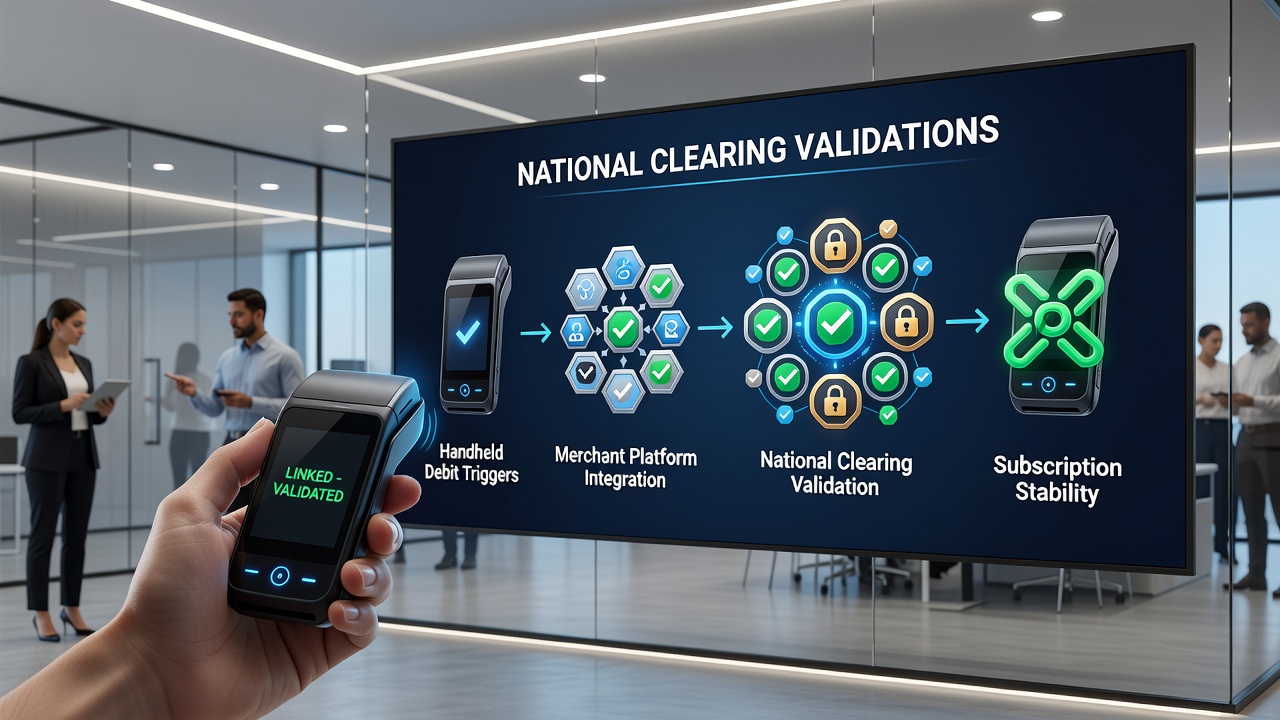
Linking Handheld Debit Triggers to National Clearing Validations for Subscription Stability Across Merchant Platforms
Merchants across platforms have integrated handheld debit triggers with national clearing validations to maintain subscription continuity, and data from payment networks show how these connections reduce failed recurring charges while supporting compliance requirements in multiple regions.
Core Mechanisms Connecting Mobile Debits to Clearing Systems
Handheld devices initiate debit requests through secure APIs that route directly to national clearing houses, and these pathways validate account details against real-time bank records before authorizing subscription renewals. Systems in the United States rely on NACHA operating rules for ACH transactions, whereas European setups follow SEPA protocols managed under the oversight of the European Central Bank. Researchers at academic institutions tracking transaction flows note that validation steps occur within milliseconds, allowing platforms to confirm sufficient funds and reduce involuntary churn rates.
Developers embed tokenization layers that replace sensitive card or account data with unique identifiers, and this approach satisfies PCI DSS standards while enabling repeated billing without storing raw details on merchant servers. In August 2026, updates to API specifications from several clearing networks introduced enhanced fraud scoring models that cross-reference device location with account history, producing measurable drops in unauthorized subscription attempts.
Subscription Stability Through Validated Recurring Flows
Subscription models depend on consistent authorization success rates, and linking mobile triggers to clearing validations supplies the necessary checks at each billing cycle. Payment processors report that platforms using these integrated validations experience fewer involuntary cancellations because declined transactions trigger immediate retry logic tied to updated bank status. Observers tracking merchant accounts across North America and the Asia-Pacific region document how such linkages stabilize revenue streams by confirming account ownership before each debit attempt.
Case studies from enterprise platforms reveal that combining device-based triggers with national network verifications cuts processing errors by routing requests through standardized message formats. These formats carry mandatory fields for account verification, and clearing houses return response codes that merchants use to adjust billing schedules or notify subscribers before funds are pulled.

Cross-Platform Implementation Patterns
Developers working with multiple merchant platforms embed unified SDKs that detect the operating system on handheld devices and adapt debit triggers accordingly, and these SDKs interface with clearing networks through standardized endpoints. In Canada, the Payments Canada framework governs similar linkages, while Australian payment systems follow rules set by the Australian Payments Network. Figures from industry reports indicate that platforms adopting these cross-region standards maintain higher uptime for recurring billing operations.
Security protocols require dual authentication at the device level and again at the clearing stage, and this layered approach prevents unauthorized subscription modifications even when user credentials are compromised. Researchers examining transaction logs from 2025 through mid-2026 found that validated debit flows reduced chargeback volumes by confirming account status before each scheduled payment.
Regulatory Alignment and Data Exchange Standards
National regulators require documented audit trails for every subscription debit that touches a clearing network, and merchants satisfy these demands by logging validation responses alongside device identifiers. The Bank of Canada has issued guidance on electronic payment linkages that mirrors requirements in other jurisdictions, encouraging use of encrypted channels for all recurring authorization messages. Data exchanges between merchant systems and clearing houses now include mandatory compliance flags that signal whether a transaction supports subscription continuity or represents a one-time purchase.
Platforms that synchronize their billing engines with these validation endpoints report fewer compliance incidents because each debit carries proof of prior account verification. In practice, this means a subscription renewal initiated on a smartphone passes through device authentication, token decryption, and finally a clearing house query that confirms the linked bank account remains active and in good standing.
Conclusion
Connections between handheld debit triggers and national clearing validations continue to shape how subscription services operate across merchant platforms, with technical standards and regulatory expectations driving further refinements in authorization workflows. Systems built on these linkages deliver consistent transaction success while meeting compliance obligations in diverse geographic markets.