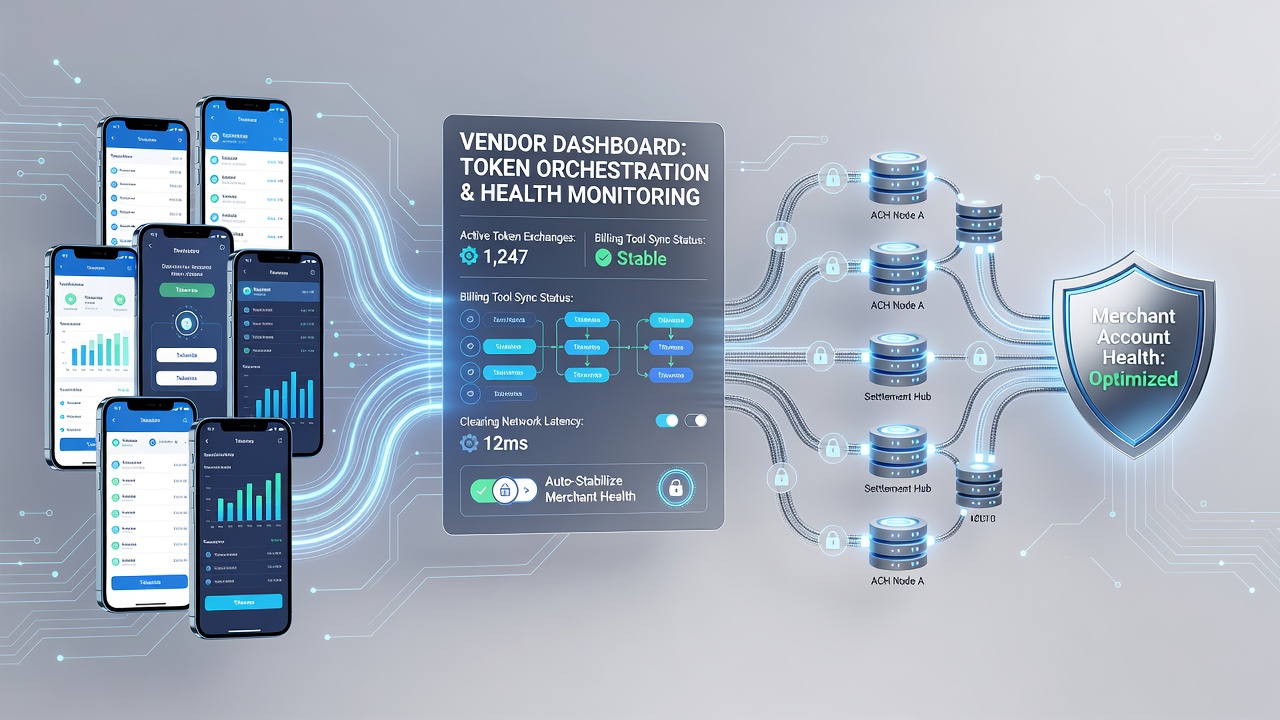
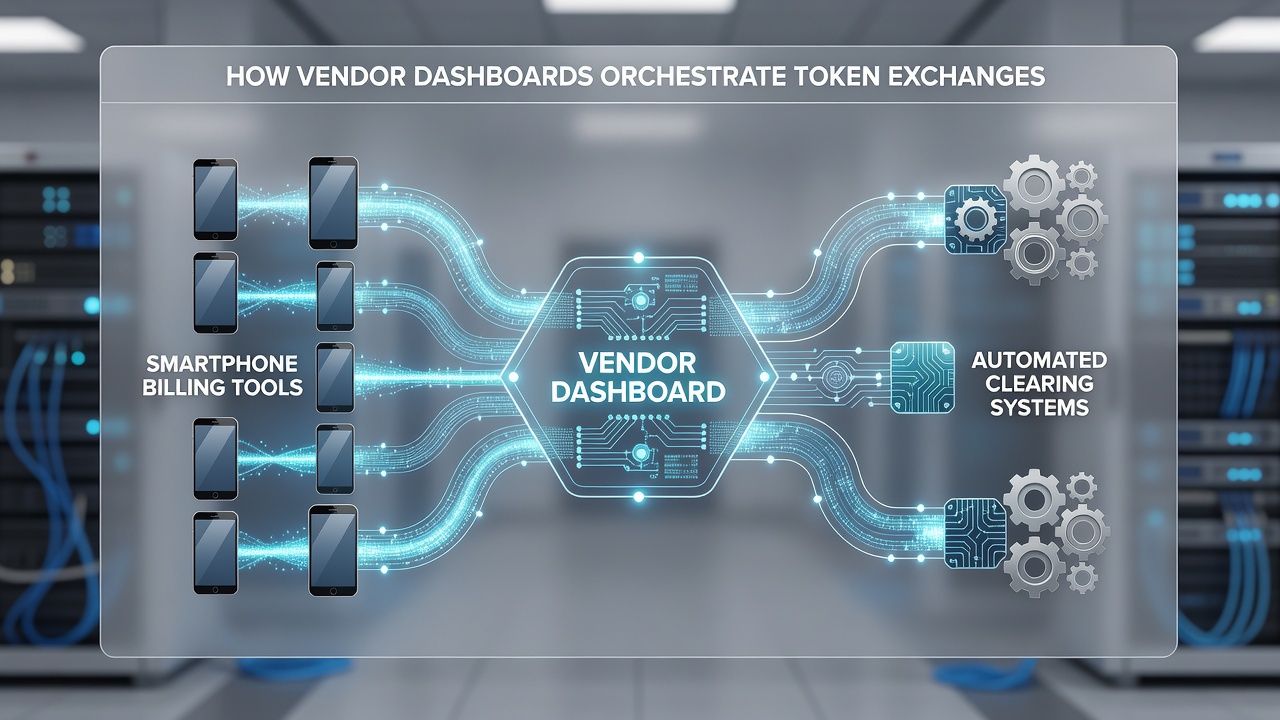
How Vendor Dashboards Orchestrate Token Exchanges Between Smartphone Billing Tools and Automated Clearing Networks to Stabilize Merchant Account Health
Vendor dashboards serve as centralized control points that coordinate token exchanges linking smartphone billing applications directly to automated clearing house networks, and observers note this coordination helps maintain consistent merchant account performance across high-volume transaction environments. These platforms manage the secure passage of tokenized payment data from mobile devices into ACH processing streams, reducing direct exposure of sensitive banking details while supporting recurring revenue cycles that depend on reliable fund movements.
Core Mechanisms in Token Orchestration
Smartphone billing tools generate payment requests that dashboards convert into tokenized representations before routing them toward ACH endpoints, adn this conversion process occurs through encrypted channels that align with established security protocols. The dashboard acts as an intermediary layer that validates each token against merchant-specific parameters, then initiates the exchange sequence that maps mobile-initiated debits onto bank clearing routes without storing full account credentials on the mobile side.
Researchers have documented how these exchanges rely on API-driven handoffs where the dashboard pulls temporary tokens from smartphone interfaces and pushes them into ACH batch preparation queues, while compliance checks run simultaneously to flag any deviations in transaction patterns. Data from industry reports indicates that such orchestration layers have become standard in systems handling subscription-based services, particularly as transaction volumes increased through the first half of 2026.
Supporting Merchant Account Stability
Stable merchant accounts depend on predictable settlement flows and controlled risk exposure, and dashboards contribute by sequencing token exchanges so that mobile billing events feed into ACH networks at intervals that match reserve requirements. This sequencing prevents sudden spikes in pending transactions that could trigger account reviews or temporary holds from acquiring banks.
Those who monitor payment operations report that dashboards also maintain audit trails for every token handoff, allowing quick reconciliation between smartphone-initiated charges and final ACH credits. When discrepancies arise, the system can isolate the affected token and reroute subsequent exchanges through alternative verification paths, thereby limiting downstream impacts on account health metrics such as chargeback ratios and reserve balances.
Integration Patterns with Mobile Billing Tools
Smartphone billing applications transmit structured data packets containing amount, frequency, and user authorization details, and vendor dashboards normalize this information into ACH-compatible formats before the token exchange completes. The process includes mapping mobile device identifiers to tokenized bank references so that recurring pulls execute without requiring repeated full credential submissions from the end user.
According to figures released by the Federal Reserve, ACH volume continued its upward trajectory into June 2026, with same-day settlement options seeing particular growth in mobile-initiated categories. Dashboards that orchestrate these flows incorporate timing logic to align smartphone billing cycles with ACH processing windows, which helps merchants avoid settlement gaps that might otherwise affect cash flow projections.
Connection to Automated Clearing Networks
Automated clearing networks operate on batch processing schedules, and vendor dashboards insert token exchanges into these batches at predetermined intervals that correspond to merchant risk profiles. The dashboard monitors network response codes in real time, adjusting subsequent token routing if earlier exchanges encounter delays or rejections from originating depository financial institutions.
One documented approach involves segmenting token pools so that high-frequency smartphone billing events draw from dedicated exchange queues separate from one-time mobile purchases, and this segmentation supports more granular monitoring of how different transaction types affect overall merchant account standing. European Central Bank statistics on retail payment systems show similar patterns in cross-border ACH equivalents, where intermediary platforms perform comparable token mediation functions.
Current Developments Observed in Mid-2026
By June 2026, several payment platforms had expanded dashboard capabilities to include predictive token routing that anticipates ACH network load based on historical smartphone billing patterns. These enhancements allow preemptive redistribution of exchange traffic across multiple clearing routes, which further contributes to account stability by minimizing single-point processing bottlenecks.
Industry analyses note that merchants utilizing such orchestrated systems recorded lower variance in monthly reserve requirements compared with those relying on direct mobile-to-bank connections. The dashboards achieve this outcome through continuous recalibration of token validity windows and automated fallback procedures when primary ACH paths report capacity constraints.
Conclusion
Vendor dashboards maintain their role as orchestration points by managing the precise timing and validation of token exchanges that connect smartphone billing tools with automated clearing networks. This coordination produces measurable effects on merchant account health through improved settlement predictability and reduced exposure during recurring transaction cycles. As ACH volumes and mobile billing adoption continue to rise, the technical linkages these dashboards maintain remain central to operational consistency across payment ecosystems.