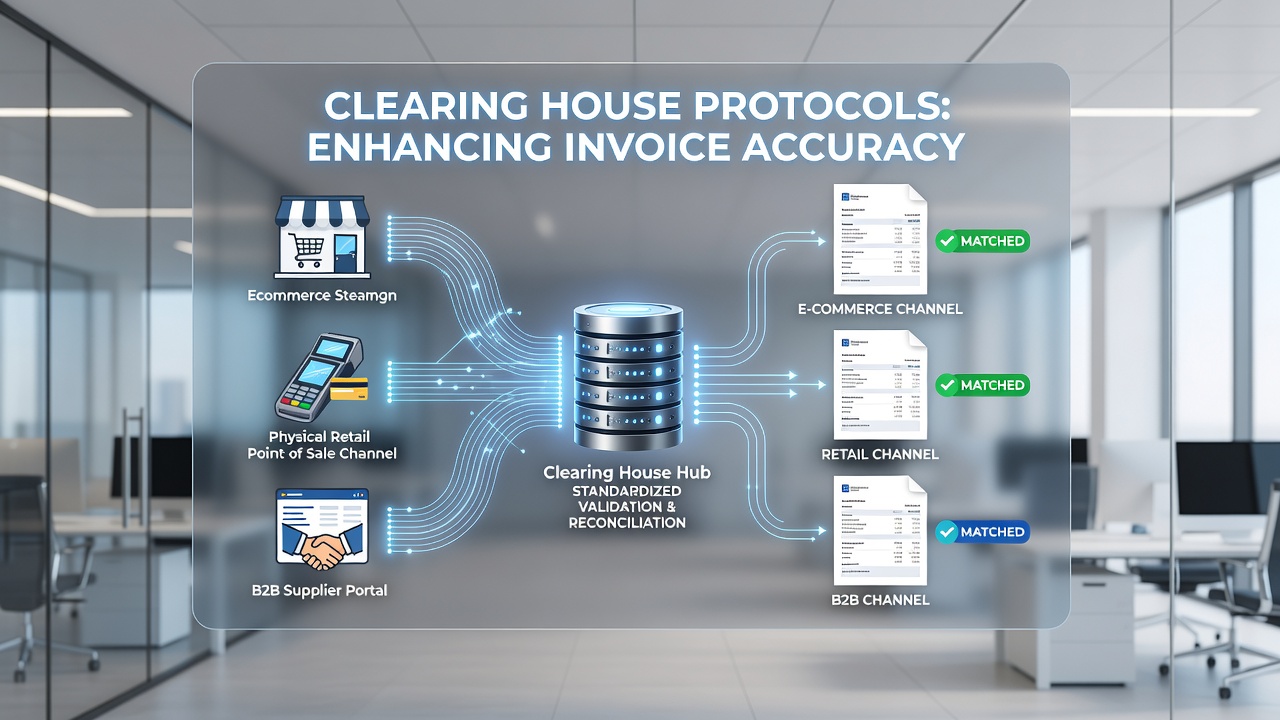
How Clearing House Protocols Enhance Invoice Accuracy Across Multiple Sales Channels
Clearing house protocols serve as centralized mechanisms that route and verify financial transactions between merchants and financial institutions, and these systems play a direct role in maintaining invoice accuracy when businesses operate across diverse sales channels such as e-commerce platforms, physical retail points, and mobile applications. Data from regulatory bodies shows that standardized message formats and automated reconciliation steps reduce discrepancies in billing records by aligning transaction details at the point of settlement rather than after the fact. Protocols operate through batch processing cycles where payment instructions undergo validation against account details and order references before funds move between parties. This process incorporates unique identifiers that link each invoice to its corresponding sales record, which helps prevent mismatches when a single customer places orders through separate channels on the same day. Observers note that the inclusion of remittance data in clearing messages allows automated systems to match incoming payments to outstanding invoices without manual intervention in most routine cases.Protocol Mechanics in Varied Sales Environments
Multiple sales channels generate transaction data in different formats, yet clearing house rules require conversion into uniform structures that include fields for invoice numbers, line-item totals, and tax components. In online environments, API calls feed order data directly into these structures, while point-of-sale terminals transmit batch files at the end of each shift. Mobile channels add geolocation tags and device identifiers that clearing systems can cross-reference during validation steps.
Research indicates that the European Payments Council maintains guidelines requiring all participants to embed invoice metadata within ISO 20022 messages, and similar requirements appear in frameworks issued by the Federal Reserve for domestic ACH transactions. These standards ensure that an invoice generated on a website carries the same reference structure as one created through a retail kiosk, which simplifies downstream reconciliation when payments arrive through a shared clearing pathway.
Reconciliation Processes and Error Reduction
Clearing houses run automated matching routines that compare cleared amounts against submitted invoice totals, flagging variances for review before final settlement occurs. When an e-commerce order and an in-store purchase share the same customer account number, the protocol links both records under a single identifier, allowing the system to apply partial payments accurately across both channels. Figures reveal that organizations using these linked identifiers report fewer unmatched transactions in monthly closing reports.
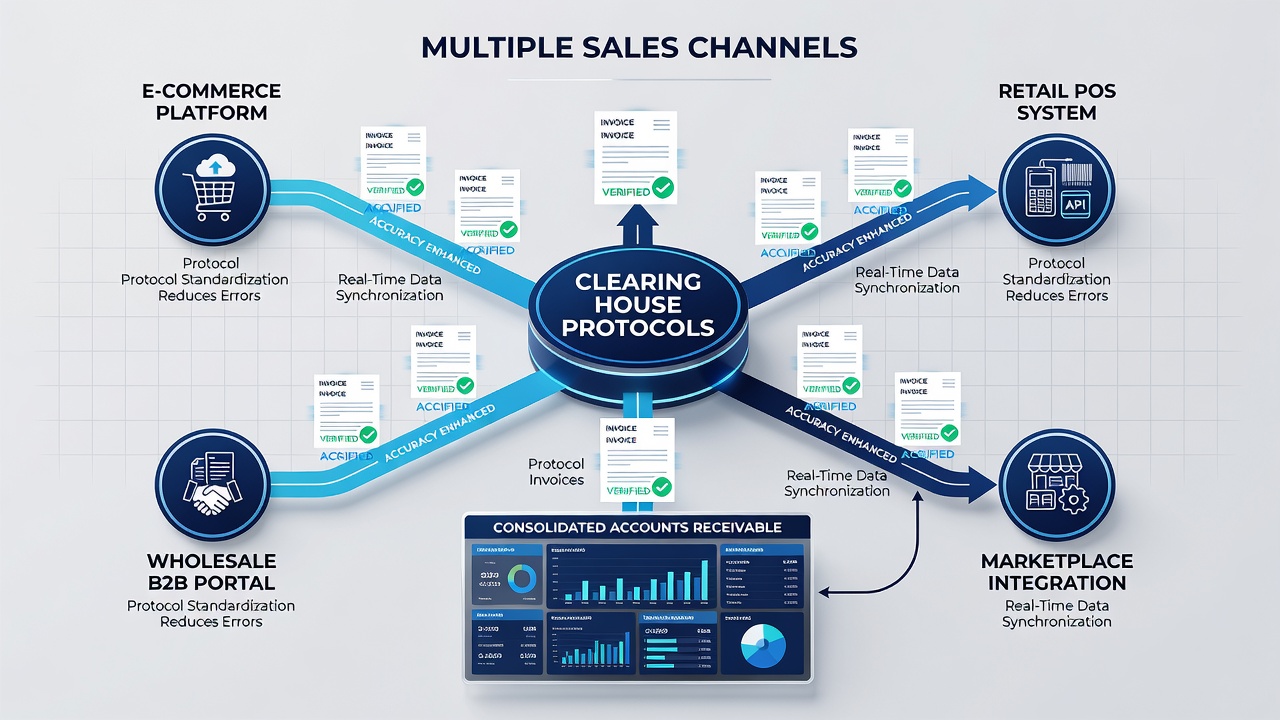
Bank network links transmit exception reports back to merchant accounting systems within the same processing window, and this timing enables staff to correct data entry errors before the next cycle begins. One study from Payments Canada documented how standardized exception codes reduced average resolution time for invoice disputes from several days to under four hours in participating organizations. The same study tracked error rates across retail, wholesale, and subscription channels, showing consistent improvement after protocol updates took effect.
Compliance Layers Across Channels
Regulatory requirements in different jurisdictions mandate that clearing participants retain detailed audit trails that map each invoice to its settlement record. These trails support verification during periodic examinations by authorities such as the Australian Securities and Investments Commission and the Monetary Authority of Singapore. Protocols embed timestamps and digital signatures that confirm when invoice data entered the clearing stream, which helps organizations demonstrate compliance when sales span multiple regulatory environments.
Tokenization within clearing messages protects sensitive invoice references while preserving the ability to reconcile across channels. Merchants can query status using tokenized identifiers without exposing full account details, and this approach maintains accuracy even when mobile payments route through different processors than web-based orders. Industry reports from the Bank for International Settlements note that token-based reconciliation has become standard practice in cross-border clearing arrangements.
Integration With Merchant Systems
Developers build connectors that translate channel-specific data into clearing house formats, and these connectors pull invoice line items directly from enterprise resource planning platforms. When a subscription renewal processes through a mobile app while an initial sale occurred on a website, the clearing protocol carries forward the original invoice reference, preventing duplicate billing entries. Data shows that automated connectors lower the incidence of human transcription errors that previously occurred during manual data transfers.
Real-time status updates flow back through the same connections, allowing accounting teams to monitor clearing outcomes across all channels from a single dashboard. Exception queues receive prioritized routing based on amount thresholds and channel type, which directs larger discrepancies from wholesale channels to senior review staff while routing smaller retail mismatches to automated correction routines.
Conclusion
Clearing house protocols supply the technical foundation that aligns invoice data across multiple sales channels through standardized messaging, automated reconciliation, and regulatory-compliant audit trails. Organizations that implement these protocols observe measurable reductions in unmatched transactions and faster resolution of discrepancies, as documented in reports from international payment authorities. Continued alignment between channel-specific systems and clearing requirements supports ongoing accuracy in invoice management as transaction volumes grow.