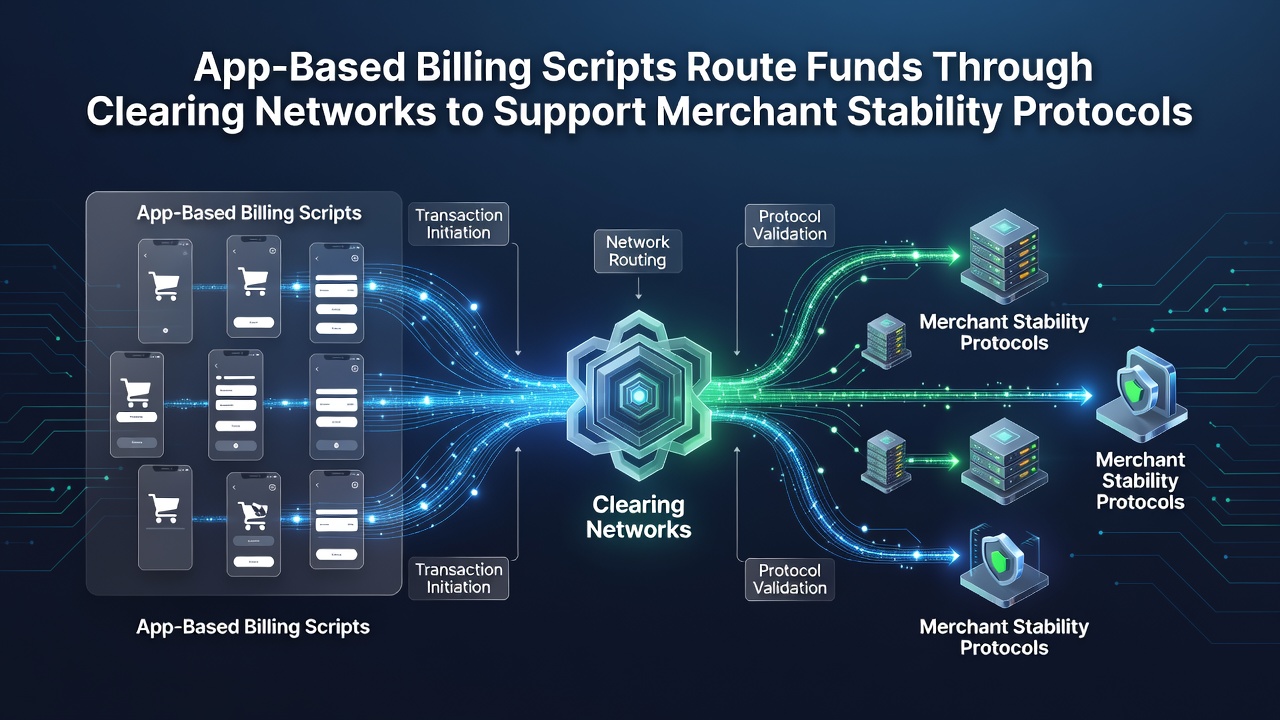
How App-Based Billing Scripts Route Funds Through Clearing Networks to Support Merchant Stability Protocols
App-based billing scripts handle the movement of funds from customer accounts to merchant ledgers by interfacing directly with automated clearing house systems and card networks, and these scripts execute predefined sequences that verify authorization before initiating transfers. Developers build these scripts to parse transaction data, apply compliance checks, and direct payments along established pathways that reduce settlement delays. Research from the Federal Reserve indicates that electronic fund transfers processed through such scripts reached record volumes in 2025, with further growth projected into August 2026 as mobile commerce continues to expand.
Mechanics of Script-Driven Fund Routing
Scripts embedded in merchant applications capture payment details at the point of sale or during subscription cycles, then format those details according to network specifications before submission to clearing houses. The process begins with tokenization of account information, followed by routing instructions that specify whether the transaction travels through ACH batches or real-time card rails. Observers note that scripts often incorporate retry logic and fallback pathways, which allow transactions to reroute automatically when primary networks report congestion or temporary holds. Data from Payments Canada shows that ACH volumes increased steadily through 2025, driven in part by these automated routing decisions in mobile environments.
Integration with Clearing Networks
Clearing networks such as the Automated Clearing House in the United States and equivalent systems in other regions receive formatted files from billing scripts at scheduled intervals, and the scripts embed merchant identifiers along with stability parameters that signal reserve requirements. When a script detects recurring payment patterns, it can trigger pre-authorization holds that feed into merchant account health metrics maintained by acquiring banks. According to figures released by the European Central Bank, cross-border ACH-equivalent volumes grew by double digits in recent reporting periods, reflecting wider adoption of script-based routing in app ecosystems. The scripts maintain audit trails that record each hop through the network, which supports later reconciliation and regulatory reporting.
Batch processing remains central to many clearing operations, yet scripts increasingly support same-day settlement options where available. In August 2026, several networks plan to expand real-time capabilities that billing scripts can access through updated APIs, allowing merchants to see funds reflected sooner while still satisfying stability protocols that require minimum reserve balances. Those protocols, enforced at the acquirer level, use data points supplied by the scripts to calculate risk scores and adjust hold periods accordingly.
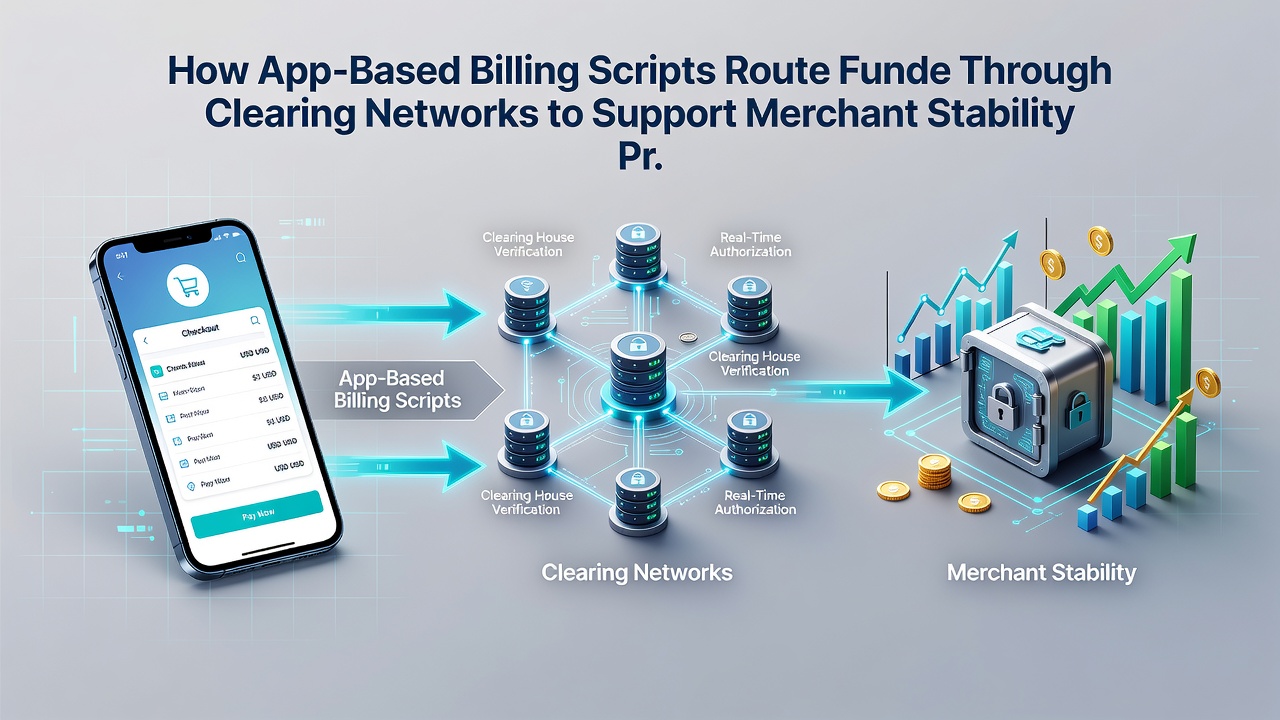
Role in Merchant Stability Protocols
Merchant stability protocols rely on consistent cash flow visibility, and billing scripts contribute by supplying transaction metadata that acquirers use to monitor account velocity and dispute ratios. Scripts can pause or redirect funds when predefined thresholds are approached, thereby preventing overdraft conditions that might trigger account reviews. Industry reports compiled by NACHA highlight that automated compliance features within scripts correlate with lower rates of merchant account terminations across multiple sectors. The routing logic also incorporates geographic and device-based signals that help distinguish legitimate recurring activity from anomalous patterns, feeding directly into the stability calculations performed downstream.
Take one mid-sized subscription service that integrated script updates in late 2025; transaction logs showed improved settlement predictability after the changes, with fewer manual interventions required from the acquiring bank. Researchers at academic institutions studying payment systems have documented similar outcomes when scripts align closely with network rules for batch timing and reserve allocation. These alignments reduce the frequency of funds being held beyond standard clearing windows, which in turn supports the overall health metrics tracked by processors.
Technical Considerations for Developers
Developers writing billing scripts must account for error codes returned by clearing networks and translate those into actions that preserve merchant account standing. Error handling routines often include escalation paths that notify compliance teams while attempting secondary routes through alternative rails. Documentation from payments associations indicates that scripts using modular architecture adapt more readily to rule changes announced by networks ahead of the 2026 updates. Encryption standards and key rotation schedules form part of the script requirements, ensuring that sensitive routing data remains protected throughout the transfer sequence.
Testing environments replicate live clearing conditions so that scripts undergo validation before deployment, and results from these tests feed into risk models used by acquiring institutions. The combination of script precision and network infrastructure creates a feedback loop that continuously refines the parameters supporting merchant stability.
Conclusion
App-based billing scripts form an essential layer between customer payment initiation and final settlement in clearing networks, supplying the structured data and routing decisions that underpin merchant stability protocols. As networks prepare enhancements scheduled for August 2026, the role of these scripts in maintaining compliant and predictable fund flows continues to expand across mobile commerce channels.