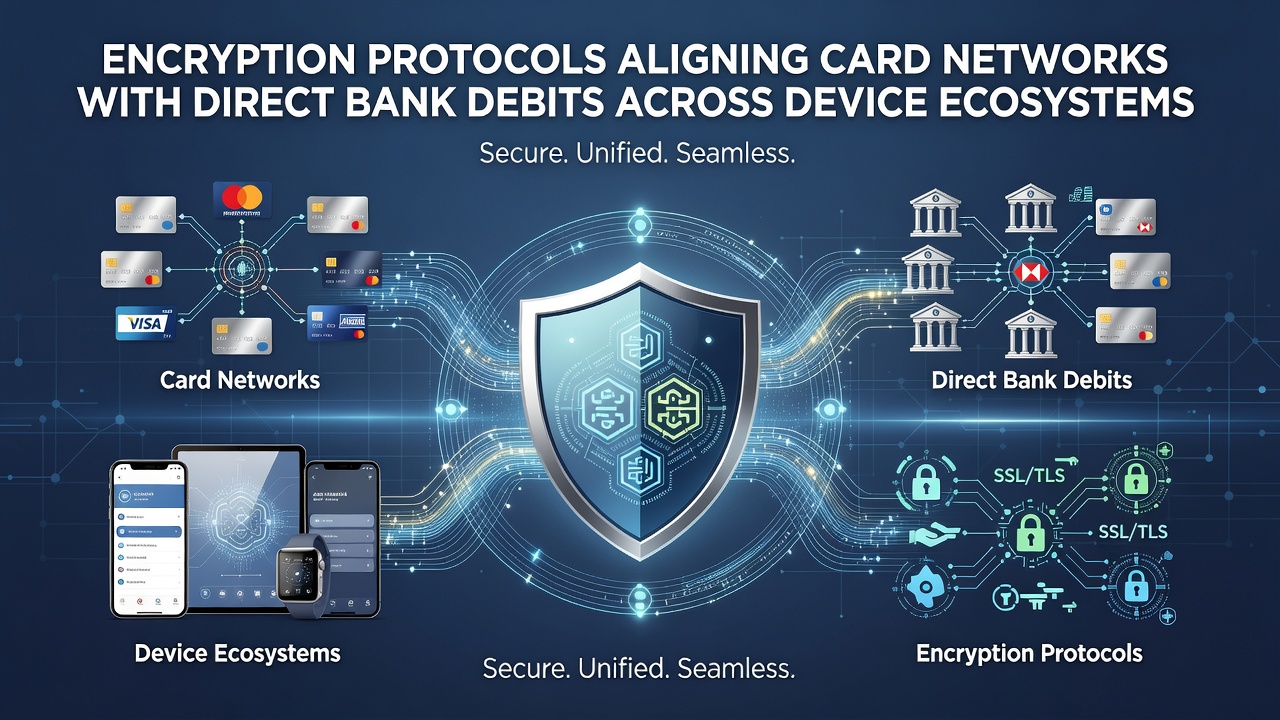
Encryption Protocols Aligning Card Networks With Direct Bank Debits Across Device Ecosystems
Card networks and direct bank debit systems operate on separate rails yet merchants increasingly require unified flows that move funds from credit cards and checking accounts within the same transaction session. Encryption protocols create the technical bridge that keeps sensitive account data protected while allowing these systems to exchange authorization requests across smartphones, tablets, and desktop browsers.
Tokenization replaces primary account numbers with unique tokens that lose value outside specific merchant environments, and this technique now extends to ACH transactions through standardized formats adopted by NACHA and card schemes. Researchers at the National Institute of Standards and Technology have documented how AES-256 encryption combined with TLS 1.3 secures the transmission of tokenized bank routing data between payment gateways and core banking processors.
Core Encryption Mechanisms in Cross-Network Alignment
End-to-end encryption wraps payment instructions from the moment a user initiates a debit on a mobile device until the funds settle at the receiving bank. Card networks apply EMVCo token specifications that now include fields for bank account identifiers, while direct debit networks add corresponding encryption wrappers that comply with the same key management standards.
Device ecosystems introduce additional variables because operating systems on iOS and Android handle cryptographic operations differently from browser environments on Windows or macOS. Developers implement platform-specific APIs such as Android Keystore and Apple Secure Enclave to store session keys, and these same keys encrypt both card and ACH payloads before they leave the device. Observers note that this shared cryptographic layer reduces the number of distinct security implementations merchants must maintain.
Compliance Frameworks Guiding Protocol Adoption
Payment Card Industry Data Security Standard requirements intersect with regional regulations such as the European Union's Revised Payment Services Directive when transactions cross from card rails to bank accounts. Merchants must demonstrate that encryption protects data at rest and in transit regardless of whether the source account is a credit card or a checking account. Data from the European Central Bank shows transaction volumes using combined card and direct debit methods grew steadily through 2025, prompting updates to security testing procedures scheduled for broader rollout in July 2026.
Key rotation schedules and certificate pinning now apply uniformly to both network types. Payment processors that previously maintained separate compliance teams for card and ACH traffic have consolidated those functions because the underlying encryption controls satisfy multiple regulatory checklists simultaneously.
Practical Implementations Across Device Types
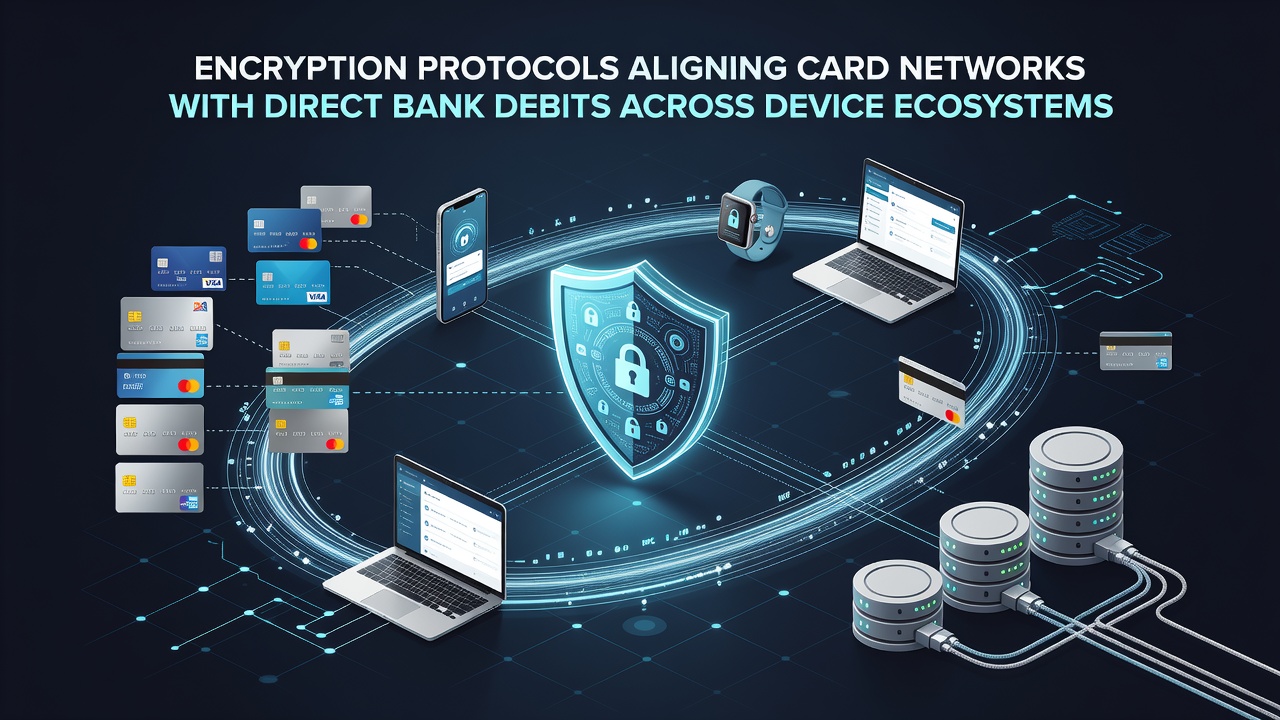
Mobile applications transmit encrypted payloads through secure channels that card networks and ACH operators both accept without reformatting. One processor that integrated these flows reported that a single API call could now route a tokenized card authorization or an encrypted bank debit to the appropriate network based on the customer's selected funding source. Desktop web checkouts follow similar patterns once the browser establishes a TLS session that meets current cipher suite requirements.
Wearable devices present narrower bandwidth but still rely on the same encryption primitives. Short-range communication protocols such as NFC carry encrypted tokens to point-of-sale terminals that forward requests to either card networks or bank clearing houses depending on the transaction type. Studies indicate that maintaining consistent encryption strength across these form factors prevents downgrade attacks that could expose account details during network handoffs.
Future Alignment Points Scheduled for 2026
Industry working groups continue to refine message formats so that risk signals generated during card authorization can inform direct debit decisions and vice versa. Encryption protocols already support the inclusion of these signals within protected data fields. Implementation timelines point toward broader testing phases beginning in July 2026 that will verify interoperability between updated card network specifications and revised ACH file encryption standards.
Conclusion
Encryption protocols now serve as the common foundation that lets card networks and direct bank debit systems exchange transaction data without exposing sensitive information across mobile, tablet, and desktop environments. Standardized token formats and key management practices reduce duplication while satisfying overlapping compliance obligations. As testing milestones approach in July 2026, merchants and processors continue to adopt these aligned encryption layers to support seamless funding source choices for customers.