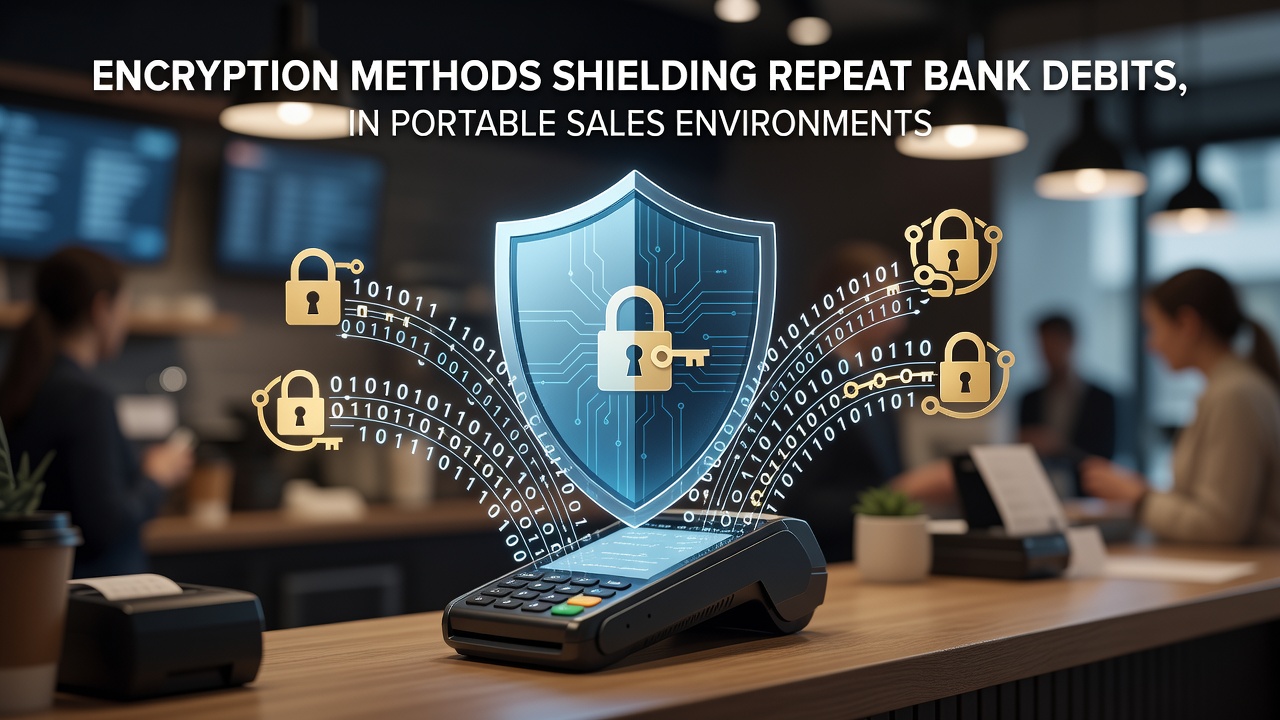
Encryption Methods Shielding Repeat Bank Debits in Portable Sales Environments
Encryption serves as the primary defense for recurring bank debits processed through portable sales terminals, where mobile devices capture and transmit payment instructions to automated clearing networks multiple times per customer cycle. These methods convert sensitive account data into unreadable formats during transmission and storage, while tokenization replaces actual bank details with unique identifiers that merchants can use for future debits without retaining original information.
Core Encryption Protocols in Mobile Debit Systems
Advanced Encryption Standard with 256-bit keys protects data at rest on handheld devices, and Transport Layer Security version 1.3 secures channels between the portable terminal and payment processors during each authorization request. Researchers at the National Institute of Standards and Technology have documented how these protocols resist brute-force attacks even when devices operate on public networks common in field sales scenarios. Point-to-point encryption further isolates debit instructions from the moment they leave the mobile application until they reach the acquiring bank, preventing interception at intermediate points.
Key rotation schedules ensure that encryption credentials change at fixed intervals, often daily or after a set number of transactions, which limits exposure if a single session key becomes compromised. Hardware security modules embedded in portable terminals generate and store these keys separately from the main processor, adding a physical barrier against extraction attempts by unauthorized parties.
Application to Recurring Bank Debits
Repeat debits require persistent authorization records, yet encryption frameworks allow merchants to store only tokenized references rather than full routing and account numbers. When a scheduled debit initiates from a mobile point-of-sale unit, the system retrieves the token, re-encrypts the instruction under the current session key, and forwards it through secure gateways to the ACH operator. Observers note that this approach satisfies both NACHA operating rules and PCI-DSS requirements without exposing live bank credentials during the portable transaction flow.
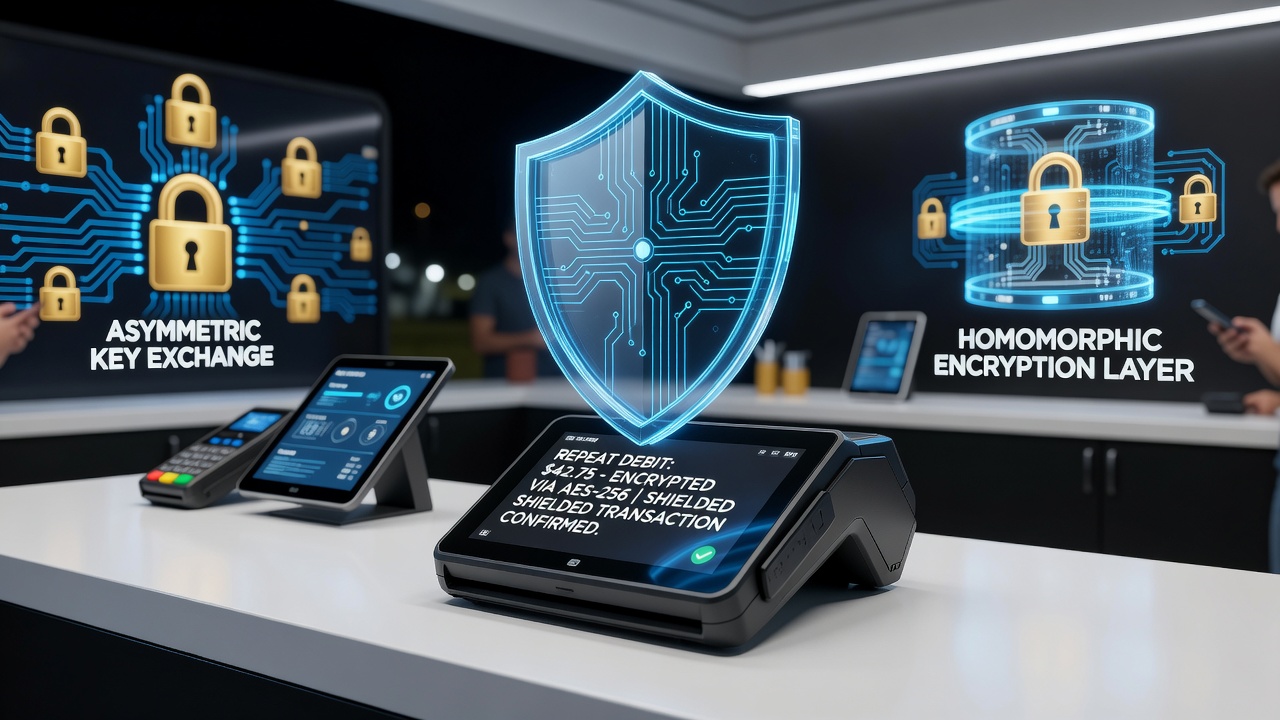
End-to-end encryption extends across the entire lifecycle of a recurring payment, encompassing initial customer consent captured on the device, subsequent automated pulls, and any reversal messages that may occur. Data shows that implementations using authenticated encryption with associated data provide integrity checks, confirming that instructions have not been altered in transit between the sales representative's tablet and the destination bank account.
Regulatory Alignment and Technical Integration
Payment service providers align their mobile encryption stacks with directives from the European Banking Authority and guidelines issued by the Reserve Bank of Australia, both of which emphasize strong customer authentication paired with robust encryption for recurring electronic funds transfers. Integration layers within portable applications invoke these standards automatically when a user schedules a series of debits, applying the appropriate cipher suite based on the destination network and regulatory jurisdiction.
Developers incorporate secure element chips in newer handheld terminals to isolate encryption operations from the general operating system, reducing risks associated with malware that might target standard memory spaces. Tests conducted by industry labs confirm that such hardware isolation maintains performance levels suitable for high-volume field sales while upholding the confidentiality of repeated bank instructions.
Conclusion
Encryption methods continue to evolve alongside portable sales technology, delivering layered protection for repeat bank debits through tokenization, session-based encryption, and hardware-backed key management. These techniques enable merchants to process recurring transactions on mobile devices while meeting compliance obligations across multiple regulatory regions. As network standards advance, ongoing refinements in cipher implementation and key distribution protocols support secure operations in dynamic field environments.