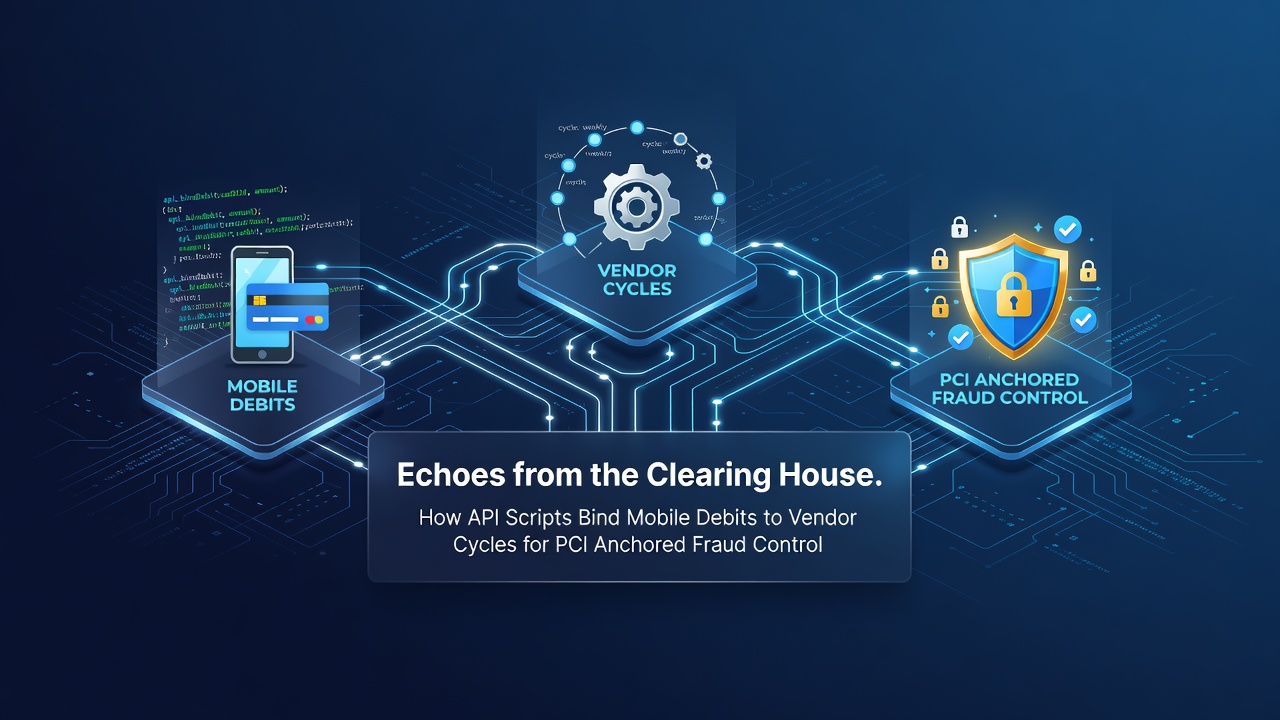
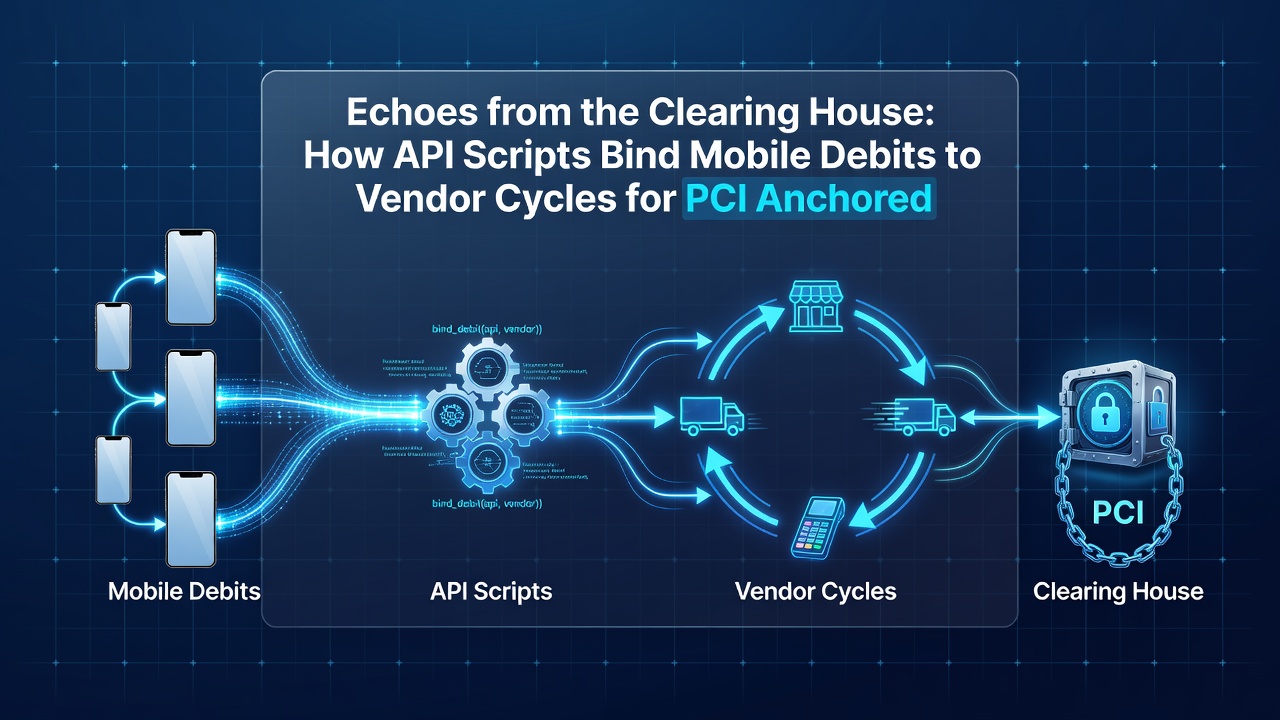
Echoes from the Clearing House: How API Scripts Bind Mobile Debits to Vendor Cycles for PCI Anchored Fraud Control
Payment systems continue to evolve through layered connections that tie mobile-initiated debits directly into established clearing house routes, and observers note that API scripts serve as the primary mechanism for aligning these flows with recurring vendor cycles while maintaining PCI DSS requirements for data protection.
Core Components of Mobile Debit Pathways
Developers build scripts that capture debit requests from smartphone applications, then route authorization details through secure channels to automated clearing networks, and this process repeats across subscription models where vendors schedule periodic pulls from linked bank accounts. Research from the Federal Reserve indicates that mobile ACH transactions increased steadily through 2025, with API-driven integrations accounting for a growing share of those volumes as merchants seek to reduce card processing costs.
Those integrations rely on standardized endpoints that transmit tokenized account data rather than raw credentials, and experts have observed that this approach limits exposure points during each cycle. In practice, a script might initiate a pre-notification to the clearing house, receive confirmation codes, and then trigger the actual debit on the scheduled date, all while logging events for compliance audits.
Vendor Cycle Synchronization Through Developer Tools
Vendors manage recurring billing by embedding API calls within their backend systems that align mobile debits with fixed intervals, such as monthly or quarterly pulls, and these calls reference stored tokens that reference the original authorization without re-entering sensitive details. Data from the European Central Bank shows that cross-border ACH-equivalent transactions processed via API layers grew by double-digit percentages in several EU member states during the first half of 2026, reflecting broader adoption of automated reconciliation features.
One study of merchant platforms revealed that scripts often include retry logic and status polling loops, which help maintain cycle integrity when network delays occur between the mobile device and the clearing house. Observers note that such features also feed into risk-scoring engines that flag unusual patterns before funds move.
PCI Anchoring Mechanisms in API Scripts
PCI DSS requirements shape how scripts handle card and account data by mandating encryption at rest and in transit, along with strict access controls that limit which components can interact with primary account numbers. Scripts achieve this anchoring by routing all mobile debit requests through certified gateways that tokenize information before it reaches vendor databases, and this separation reduces the scope of compliance audits for the merchant side.
Additional layers include real-time validation against known fraud databases and dynamic CVV equivalents for mobile sessions, and researchers have documented that these steps contribute to lower dispute rates in recurring scenarios. As of August 2026, updated PCI guidance emphasizes continuous monitoring of API endpoints, prompting vendors to incorporate automated logging that feeds directly into clearing house reconciliation reports.
Practical Implementation Patterns Across Merchant Ecosystems
Merchants in subscription sectors frequently deploy scripts that combine mobile push notifications with ACH pull requests, creating a unified cycle where the customer authorizes once on their device and subsequent debits execute through the clearing house without further intervention. Figures from industry reports show that platforms using these combined pathways report fewer failed transactions compared with legacy batch processes.
Take one integration where a vendor dashboard orchestrates token exchanges between the mobile billing tool and the automated clearing network, and this setup stabilizes account health by preventing duplicate entries or timing mismatches. Those who've implemented such systems often discover that error-handling routines built into the scripts also support regulatory reporting requirements in multiple jurisdictions.
Security and Compliance Outcomes
Evidence suggests that API-mediated connections between mobile debits and clearing houses strengthen fraud defenses because each transaction carries traceable metadata that links back to the original authorization event. This traceability supports PCI-mandated incident response procedures when anomalies appear in vendor cycles.
Scripts commonly embed checksum validations and session timeouts that align with clearing house cut-off times, and these elements help prevent out-of-cycle debits that could trigger compliance flags. Data indicates that merchants maintaining these controls experience smoother audits and faster resolution of any discrepancies reported through the network.
Conclusion
API scripts continue to serve as the connective tissue that binds mobile debits to vendor billing cycles while satisfying PCI requirements at each step of the clearing process. Organizations that document these flows thoroughly position themselves to adapt as networks introduce new endpoints or updated security standards. The patterns described here reflect ongoing technical practices that support reliable, compliant payment operations across mobile and traditional banking channels.