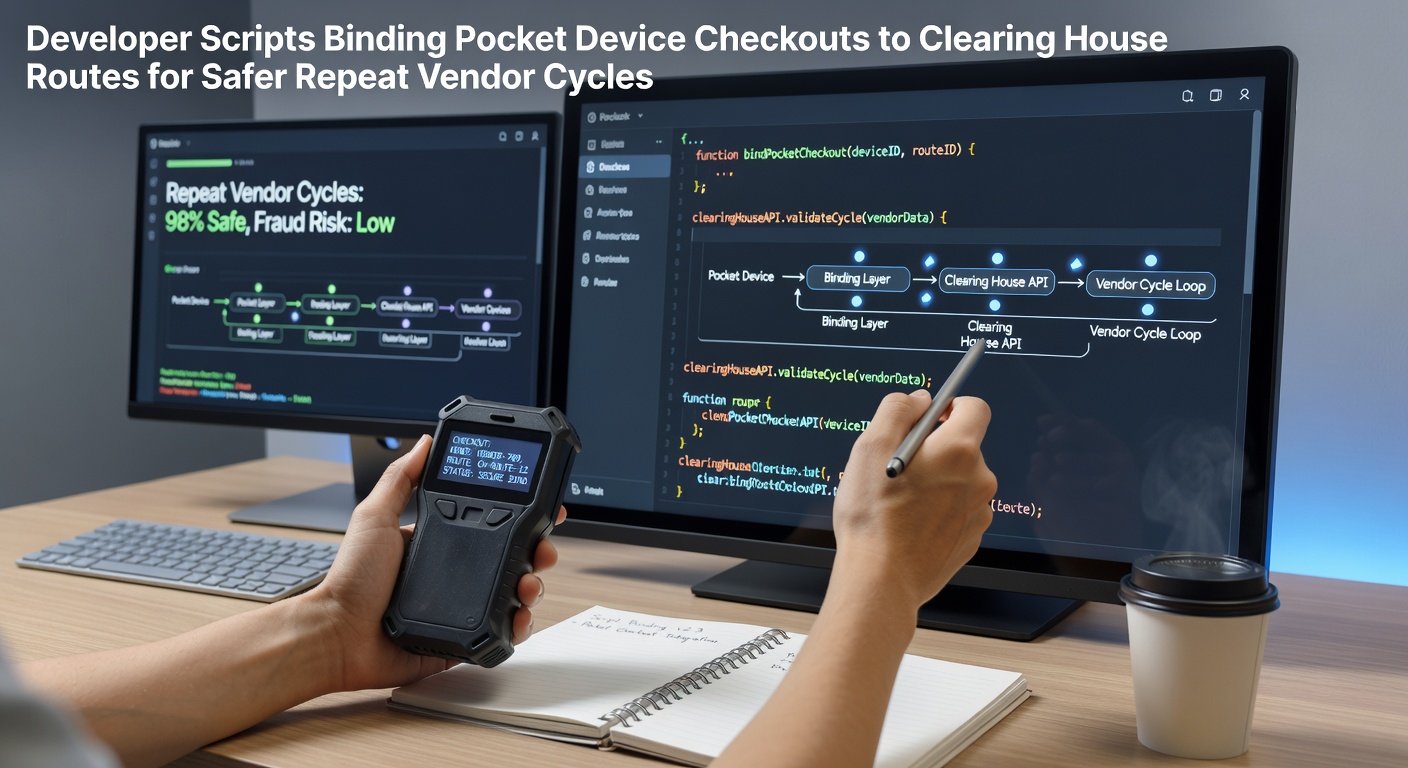
Developer Scripts Binding Pocket Device Checkouts to Clearing House Routes for Safer Repeat Vendor Cycles
Developer scripts now connect pocket device checkouts directly to clearing house routes, creating structured pathways that support safer repeat vendor cycles across mobile and handheld platforms. These scripts handle transaction initiation on portable hardware while routing data through established automated clearing house networks, which reduces exposure during recurring payment sequences. Data from payment processing systems shows that such bindings allow vendors to maintain compliance with routing standards while processing repeated debits from consumer bank accounts.
Technical Framework for Script Integration
Scripts operate by capturing checkout details on pocket devices and translating them into formatted requests that clearing houses accept, and this translation layer incorporates encryption protocols that align with network security requirements. Developers implement these bindings through API endpoints that verify device identity before data transmission begins, which ensures that each pocket checkout session links to a verified clearing route. Research indicates that organizations deploying these scripts experience fewer routing errors during high-volume repeat cycles because the code enforces consistent data formatting from the outset.
Binding Mechanisms in Practice
Binding occurs when scripts map device-generated transaction tokens to specific clearing house identifiers, and this mapping supports automated retries if initial routes encounter temporary delays. Observers note that such mechanisms allow vendors to schedule recurring debits without manual intervention, since the script maintains session continuity between the pocket device and the clearing infrastructure. Figures from industry reports reveal that these bindings have contributed to measurable declines in failed repeat transactions in sectors that rely on subscription-style vendor relationships.
Security Enhancements for Recurring Cycles
Security improves when scripts enforce route validation at each checkout point, which prevents unauthorized redirection of funds during repeat vendor interactions. Clearing house routes incorporate fraud detection layers that scripts activate automatically, and this activation occurs before the transaction data leaves the device. According to analyses from the Federal Reserve, automated clearing systems processed over 30 billion ACH payments in recent annual periods, with integrated device scripts helping maintain those volumes while supporting compliance checks on recurring entries.
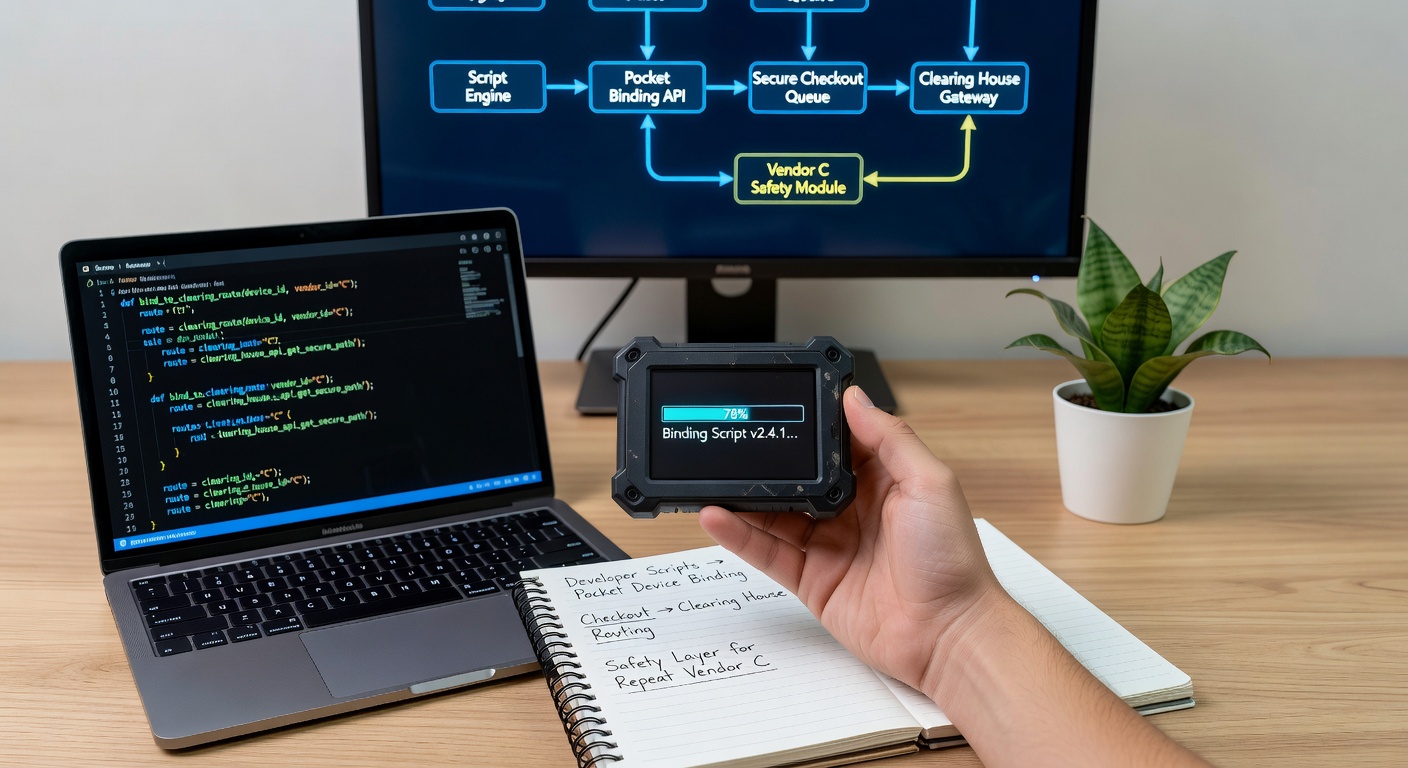
Vendors benefit when scripts log each binding event for audit purposes, since these logs provide traceable records that align with regulatory expectations for repeat payment flows. The process allows pocket device operators to confirm route status in real time, which supports quicker resolution of any discrepancies that arise in ongoing vendor cycles. European Central Bank documentation on retail payment systems highlights similar integration patterns in cross-border ACH-style networks, where device-to-route bindings have helped stabilize recurring transaction volumes.
Operational Patterns Observed in Vendor Ecosystems
Vendor ecosystems demonstrate that scripts reduce manual reconciliation steps by embedding clearing house acknowledgments directly into device interfaces, and this embedding occurs without interrupting the checkout sequence. People managing repeat cycles report that the bindings allow for dynamic adjustment of payment schedules based on route availability, since the code monitors network responses continuously. Studies from academic institutions such as the Massachusetts Institute of Technology Center for Finance and Policy have examined how these technical connections influence overall payment reliability in mobile commerce environments.
Developments Anticipated by Mid-2026
By June 2026, updates to clearing house protocols are expected to require enhanced script validation for all pocket device integrations, which will further standardize binding procedures across repeat vendor applications. Regulatory bodies in multiple regions continue to refine guidelines that affect how developers structure these connections, and compliance with those guidelines supports sustained operation of recurring payment routes. Organizations that adapt scripts ahead of these changes position their vendor cycles for uninterrupted processing under the updated frameworks.
Conclusion
Developer scripts that bind pocket device checkouts to clearing house routes deliver structured support for safer repeat vendor cycles through consistent data handling and route validation. These connections operate within established payment networks, where they facilitate recurring transactions while aligning with security and compliance standards. As technical implementations evolve through 2026, the focus remains on maintaining reliable bindings that sustain vendor operations across portable platforms.