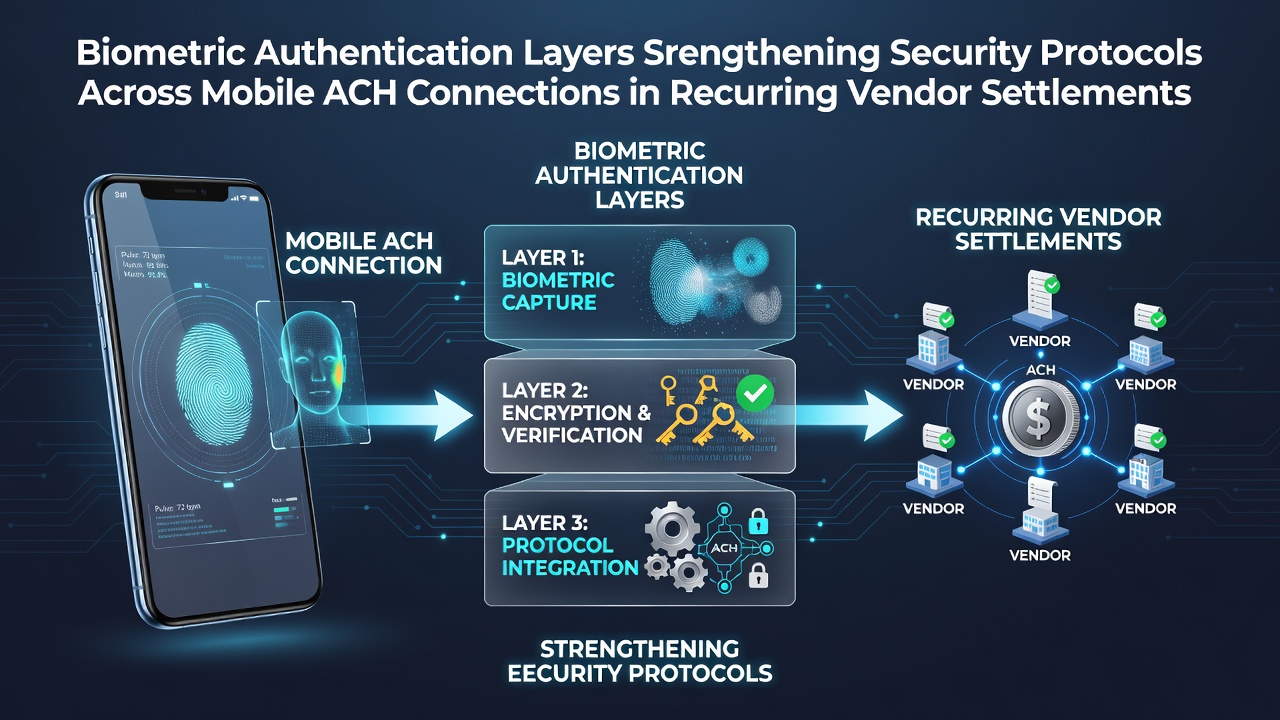
Biometric Authentication Layers Strengthening Security Protocols Across Mobile ACH Connections in Recurring Vendor Settlements
Biometric authentication layers now form a core component of security frameworks that protect mobile ACH connections used in recurring vendor settlements, and researchers have documented steady adoption across merchant platforms since the mid-2020s. These layers combine fingerprint, facial, and voice recognition with device-level encryption to verify user identity before ACH debits process through bank networks, while data from multiple payment processors shows reduced unauthorized transaction attempts in environments where such systems operate.
Core Components of Biometric Integration
Experts describe the process as a sequence that begins with enrollment of biometric data on the mobile device followed by real-time matching against stored templates during each recurring payment cycle. Developers integrate these checks through APIs that communicate with ACH operators, and studies from the Federal Reserve Bank of Atlanta indicate that multi-factor biometric prompts cut fraud rates by measurable margins when layered over standard account verification routines. Mobile applications trigger the biometric scan seconds before the settlement instruction leaves the device, and the resulting token passes through encrypted channels to the clearing house without exposing raw account details.
Observers note that hardware advancements in smartphone sensors have expanded the range of usable biometrics, so vendors can select fingerprint readers for high-volume subscription flows or facial recognition for user convenience in lower-risk scenarios. Software development kits from major operating system providers supply standardized interfaces that maintain compliance with PCI-DSS requirements while handling ACH-specific data fields, and testing conducted through 2025 confirmed consistent performance across different device models.
Security Protocols in Recurring ACH Flows
Security protocols gain strength when biometric confirmation occurs at the point of authorization rather than relying solely on stored credentials, and this approach aligns with guidelines issued by the National Institute of Standards and Technology on digital identity verification. In recurring vendor settlements the system re-authenticates the payer at predetermined intervals or upon detection of behavioral anomalies, such as unusual transaction timing or device location changes. Researchers have observed that combining these checks with ACH return-code monitoring allows processors to flag and halt suspicious debits before funds leave the originating account.

Network operators report that tokenized biometric approvals reduce the attack surface compared with traditional password or PIN methods, because the biometric template never travels across the ACH rail. By August 2026 several large payment processors had expanded support for these layered checks in their mobile SDKs, enabling smaller vendors to adopt the same safeguards without custom infrastructure. Compliance teams document the entire authorization path through audit logs that satisfy regulatory examinations from bodies such as the Consumer Financial Protection Bureau.
Implementation Patterns Across Vendor Ecosystems
Implementation follows patterns where developers embed biometric calls inside existing subscription management modules, and the resulting workflow requires the user to complete the scan once per billing period or upon account changes. Case examples from enterprise merchants illustrate that integration timelines average six to eight weeks when leveraging pre-built libraries, and performance metrics collected after rollout show faster checkout completion alongside lower dispute volumes. Those who manage high-frequency vendor payments find that fallback mechanisms, such as one-time passcodes sent to registered devices, maintain continuity when primary biometric sensors encounter temporary issues.
Data sharing agreements between device manufacturers and ACH participants further tighten the protocol by allowing risk signals from the phone's security posture to influence authorization decisions. Reports compiled by industry associations reveal that organizations adopting these combined signals experience fewer ACH returns coded as unauthorized, which in turn lowers operational costs tied to exception handling.
Conclusion
Biometric authentication layers continue to strengthen security protocols for mobile ACH connections in recurring vendor settlements through standardized integration points and ongoing protocol refinements. Evidence from regulatory filings and processor reports confirms measurable improvements in fraud resistance while preserving the efficiency of automated clearing processes. As device capabilities advance and standards bodies release updated specifications, the framework supports broader deployment across diverse merchant environments without compromising compliance or user accessibility.