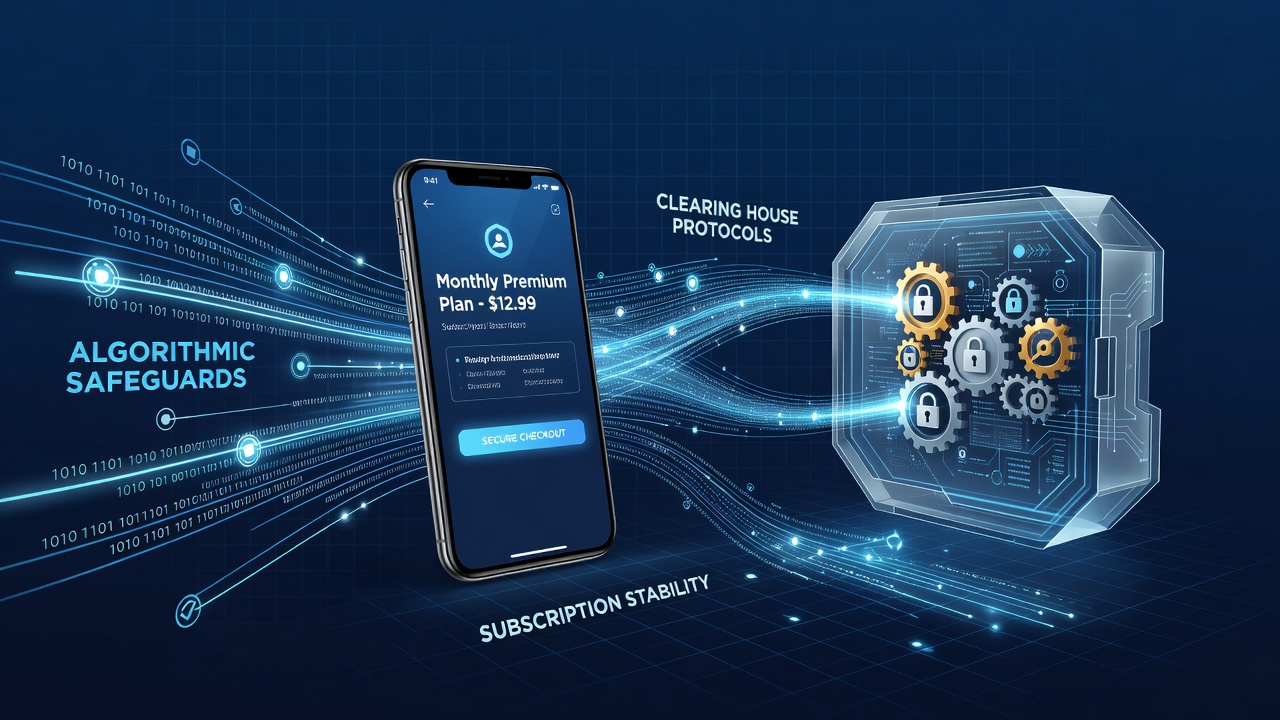
Algorithmic Safeguards Connecting Smartphone Checkouts with Clearing House Protocols for Subscription Stability
Payment systems have evolved to incorporate algorithmic safeguards that link smartphone checkouts directly to clearing house protocols, and this integration supports subscription stability across recurring billing environments. Data from industry reports indicates that mobile-initiated transactions now account for a growing share of automated clearing house activity, with protocols designed to verify authorization before funds move between accounts.
Core Mechanisms in Mobile-to-Clearing Linkages
Smartphone applications initiate debits by capturing user details at checkout, after which algorithms process signals such as device identifiers, transaction patterns, and account history before routing requests to clearing house networks. These systems apply rule-based filters that flag inconsistencies, and they do so in real time to prevent unauthorized entries from reaching settlement stages. Observers note that such filters reduce error rates in batch processing, because they cross-reference mobile inputs against established clearing protocols maintained by financial institutions.
Clearing house protocols operate on standardized formats that require specific data elements for each transaction, and algorithmic layers translate smartphone outputs into those formats while adding validation checks. Research indicates that this translation step incorporates encryption standards and tokenization methods to maintain compliance during transfer. When a subscription renewal attempt occurs, the algorithm evaluates prior payment success rates alongside current network conditions before committing the request to the automated clearing sequence.
Subscription Stability Through Pattern Recognition
Subscription models depend on consistent authorization flows, and algorithmic safeguards contribute by monitoring recurring patterns that emerge from repeated smartphone checkouts. Systems track metrics including frequency of device changes, location variances, and amount consistency, then compare those metrics against thresholds established by clearing house guidelines. When deviations appear, the algorithm can trigger additional verification steps without halting the entire batch, and this approach preserves continuity for legitimate subscribers.
Figures from payment network analyses reveal that automated detection of anomalous sequences has improved settlement success rates in recurring billing cycles. Algorithms maintain logs that clearing houses reference during reconciliation, which allows operators to identify and address discrepancies before they affect merchant account balances. Those who manage subscription platforms often integrate these detection layers to align mobile interfaces with the timing requirements of nightly ACH processing windows.

Developments Observed Through Mid-2026
By June 2026, updates to clearing house operating rules had incorporated expanded data fields for mobile-originated entries, and algorithmic tools adapted by expanding their input validation routines accordingly. Payment processors adjusted their interfaces to accommodate these fields, which include enhanced device authentication markers that strengthen the link between smartphone actions and settlement outcomes. Documentation from regulatory bodies shows that these adjustments aimed to support higher volumes of recurring transactions while maintaining existing security baselines.
Case examples demonstrate how subscription services in various sectors adopted the updated protocols, with algorithms handling the mapping of mobile tokens to clearing identifiers during each renewal cycle. One implementation revealed that pre-authorization scoring reduced failed ACH returns by cross-checking historical data against live network feeds. Such adaptations occur within the constraints of established settlement calendars, and they rely on continuous refinement of the decision trees that govern approval pathways.
Integration Points and Data Exchange Standards
Application programming interfaces serve as the primary conduits between smartphone checkout modules and clearing house endpoints, and algorithmic safeguards operate at each interface to enforce format compliance and risk scoring. These interfaces transmit encrypted payloads that contain both transaction details and metadata derived from the mobile device, allowing clearing systems to apply their own layered checks upon receipt. Standards organizations have published specifications that define acceptable data structures, and payment platforms align their algorithms with those specifications to ensure seamless handoffs.
Merchants who process subscriptions through these integrated pathways receive confirmation messages that include both mobile authorization results and clearing status codes. The combined feedback loop enables rapid adjustments to subscription records when partial failures occur, and algorithms automate the retry sequencing within defined windows to avoid duplicate entries. Data exchange remains governed by existing compliance frameworks that require audit trails for every step from device to settlement.
Conclusion
Algorithmic safeguards establish structured connections between smartphone checkouts and clearing house protocols, and they contribute measurable support for subscription stability through pattern monitoring and validation routines. Continued alignment with evolving data standards sustains these linkages, while documented implementations show consistent application across recurring billing scenarios. Payment ecosystems maintain operational continuity by embedding these safeguards at the points where mobile inputs meet established settlement processes.