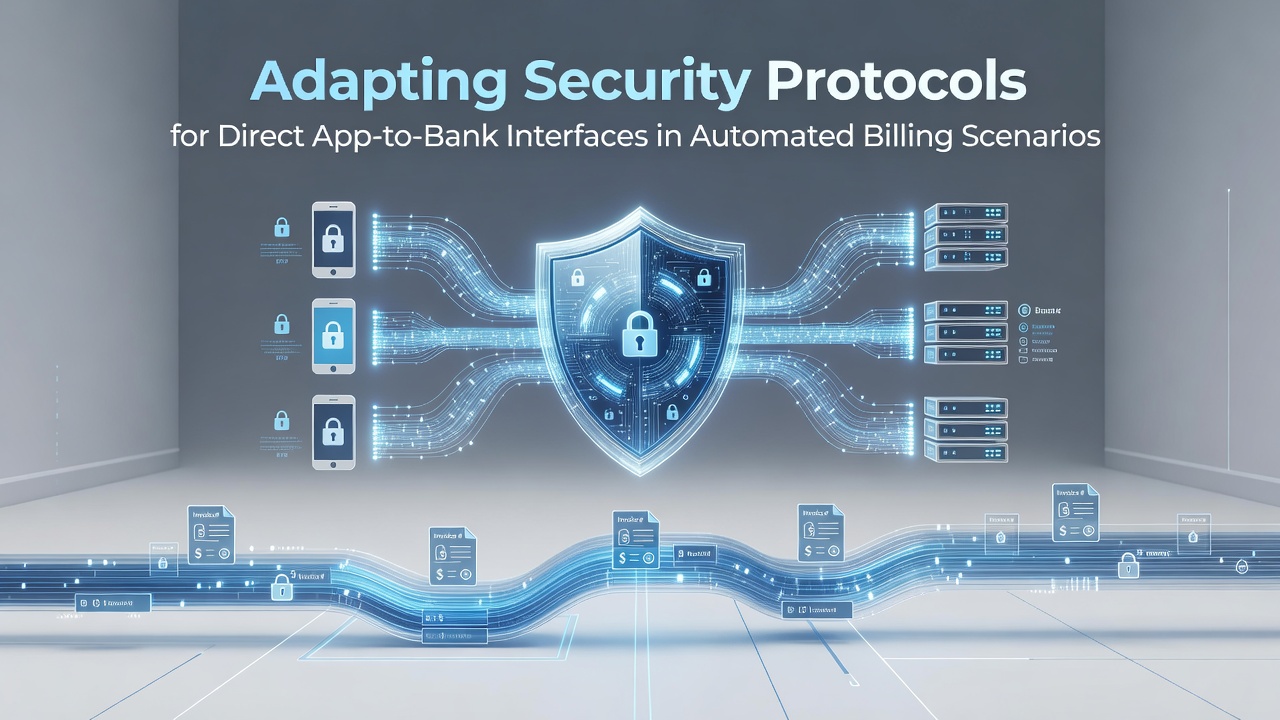
Adapting Security Protocols for Direct App-to-Bank Interfaces in Automated Billing Scenarios
Direct app-to-bank interfaces have expanded in automated billing as developers connect mobile applications straight to financial institutions through standardized APIs rather than routing everything through third-party processors. These connections support recurring charges for subscriptions and services while shifting the security burden toward endpoint authentication and continuous transaction monitoring. Research from financial technology reports shows that transaction volumes using direct bank linkages grew steadily through 2025 with further acceleration expected by mid-2026.
Core Technical Requirements for Secure Connections
Authentication begins with mutual TLS certificates combined with OAuth 2.0 flows that issue short-lived tokens scoped to specific billing operations. Banks enforce these standards through their developer portals so that each request carries cryptographic proof of origin and intent. Observers note that this layered approach reduces reliance on static credentials which have historically been targets for interception during high-volume automated cycles.
Encryption covers data both in transit and at rest with AES-256 applied to stored billing details while transport uses the latest TLS 1.3 specifications. Tokenization replaces account numbers with references that hold no intrinsic value outside the issuing bank's environment and researchers at institutions such as the National Institute of Standards and Technology continue to refine guidance on key rotation intervals for these systems.
Monitoring and Anomaly Detection Mechanisms
Real-time analytics engines examine patterns in billing frequency, amount consistency, and device fingerprints to flag deviations before funds move. Machine learning models trained on historical ACH and wire data sets identify unusual sequences such as sudden changes in geographic origin or mismatched user behavior profiles. According to data compiled by the European Banking Authority these systems lowered unauthorized transaction rates in tested environments by measurable percentages during 2025 pilot programs.
Regulatory Alignment Across Jurisdictions
Compliance frameworks require logging of every authorization step and retention of records for audit periods that vary by region. In the United States institutions align with guidelines from the Federal Deposit Insurance Corporation while Canadian operators reference directives issued by the Office of the Superintendent of Financial Institutions. Automated billing flows must therefore embed jurisdiction-specific consent capture and data residency controls directly into the application logic.
By July 2026 several jurisdictions plan to mandate enhanced customer notification requirements for any direct debit initiated through an app interface and developers are already updating their notification templates and retry logic to accommodate these rules. The changes affect how failed attempts are handled and how users receive confirmation messages across different time zones.
Integration Patterns Observed in Production Environments
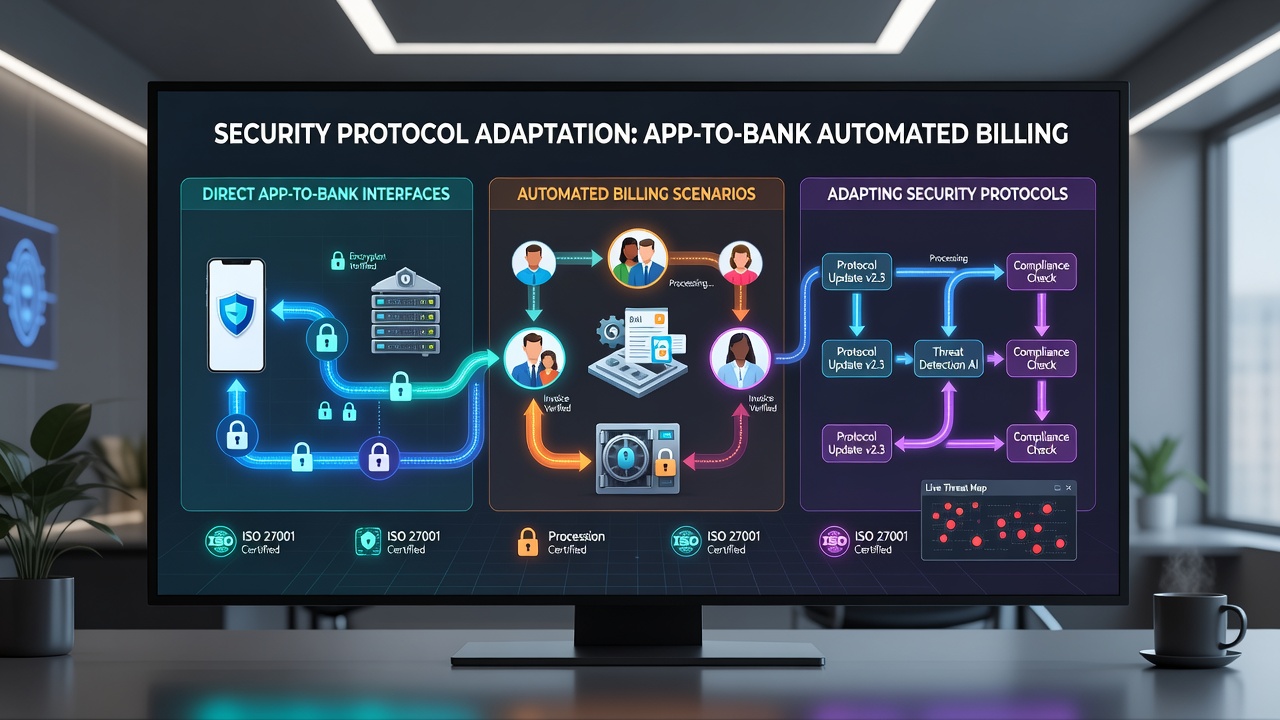
Many implementations separate the billing engine from the payment initiation layer so that sensitive bank credentials never touch the application server. Instead the app redirects the user through a bank-hosted consent screen that returns an authorization code. This pattern appears in both consumer subscription services and business-to-business invoicing platforms where recurring amounts must be collected without manual intervention each cycle.
Testing regimens include simulated phishing attempts and man-in-the-middle scenarios to verify that token revocation works within the required time windows. Organizations running these tests report that protocol updates deployed in early 2026 addressed several edge cases involving legacy mobile operating systems still in active use.
Conclusion
Direct app-to-bank interfaces continue to mature as security protocols adapt to increasing transaction volumes and evolving regulatory expectations. Encryption standards, token management, and anomaly detection together form the foundation for reliable automated billing while cross-border compliance requirements shape implementation details. Data from multiple regulatory sources indicates steady progress in reducing friction without compromising the integrity of fund movements between applications and banking networks.